Get Full Government Meeting Transcripts, Videos, & Alerts Forever!
Get email alerts on the Objective Design Standards topic
No spam. Unsubscribe anytime.
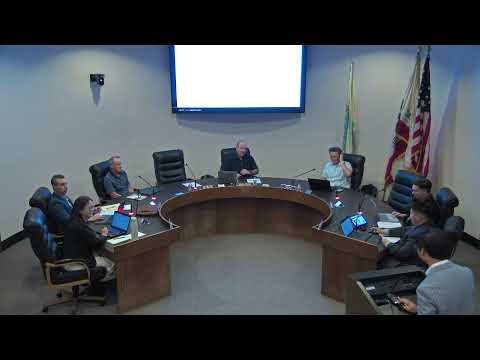
Sierra Madre planning commission continues hearing on objective design standards, forwards ordinance for council review
Summary
The Planning Commission opened a public hearing on MCTA26‑02 to adopt objective design standards for multifamily and mixed‑use projects, requested clarifications and diagrams from staff and the consultant, and continued the hearing to May 21 while sending the municipal text amendment to City Council for consideration ahead of a June 30 grant deadline.
The Sierra Madre Planning Commission on May 7 opened a public hearing on Municipal Code Text Amendment MCTA26‑02, a package that would adopt objective design standards into the city’s zoning code and set rules for multifamily and mixed‑use development. The commission heard a detailed presentation from staff and the consultant team, asked for line‑by‑line clarifications, and voted to continue the matter to a date certain of May 21 while forwarding the ordinance language up to City Council for initial review.
Assistant Planner Juan, who led the staff presentation, said the city’s version was developed from a San Gabriel Valley Council of Governments (SGV COG) regional document and tailored for Sierra Madre with funding from the SCAG REAP 2.0 program. “This amendment is consistent with our general plan’s housing element,” Juan said, adding staff’s determination that the ordinance qualifies for a common‑sense CEQA exemption under CEQA section 15061(b)(3).
Consultant representative Mr. Burns of A Royal Group told commissioners the objective standards respond to state laws such as SB 330 and are intended to limit subjective discretion that can delay or block housing projects. “Objective standards involve no personal or subjective judgment by a public official and are uniformly verifiable,” Burns said, explaining that the standards would be used where state law narrows local design review for qualifying housing projects.
Commissioners focused much of their discussion on clarity and implementation. They asked staff to: add precise definitions (for example, the draft currently references a 15‑foot minimum pedestrian opening in Appendix B6), show more diagrams and examples, and slim lengthy introductory text and appendices to improve usability. The draft distinguishes “house‑scale” and “block‑scale” typologies, applies to projects that include housing, and sets administration routes that include commission design review, a modified staff review in certain zones, and a ministerial review path for projects seeking state streamlined entitlements.
The commission also examined the standards’ exception framework. Under the current draft, staff said projects may receive up to three exceptions/exemptions while retaining a streamlined, ministerial approval path; additional relief would require a different process such as an alternative standards agreement or a variance. Commissioners and the city attorney discussed how density‑bonus waivers and state law interact with local exceptions and noted that any exceptions likely need objective findings to remain consistent with the Housing Accountability Act.
Timing drove part of the discussion. Staff reminded the commission that the SCAG REAP 2.0 grant deliverable calls for a City Council resolution by June 30; the City Council liaison noted the Council has meetings May 26 (first reading is scheduled), and May 27–28 will include budget deep dives. The commission concluded it could forward the municipal text amendment to Council to meet grant timing while the commission returns to finalize the design guidelines.
After extended line‑by‑line questions and suggested edits, a motion to continue the public hearing to May 21 passed. Commissioners also approved the consent calendar and adjourned. The ordinance is scheduled for City Council first reading May 26 with a possible second reading in June.