Get Full Government Meeting Transcripts, Videos, & Alerts Forever!
Get email alerts on the Harm Reduction topic
No spam. Unsubscribe anytime.
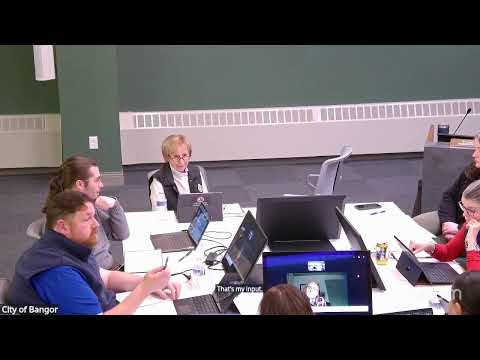
Bangor public health wins committee approval to seek pilot for syringe delivery to case-managed clients
Summary
The Government Operations Committee approved a city application to pursue a pilot allowing Bangor Public Health and Community Services to be certified as a syringe service provider for limited delivery of syringes to case-managed clients; the motion passed 4–1. Director Jen Gunnerman said the service would be supplementary to existing SSPs and dependent on Maine CDC funding.
Bangor Public Health and Community Services will seek approval to pilot a delivery-only syringe service for clients enrolled in its case management program, the Government Operations Committee decided after a detailed discussion and a 4–1 vote.
Public Health Director Jen Gunnerman told the committee the pilot would not create a brick-and-mortar or general mobile SSP but would allow staff to deliver syringes to clients who cannot reach existing syringe service providers. "This is strictly for working with clients of case management who are unable to get to an SSP," Gunnerman said, adding certification could unlock funding and create a contingency if local SSP capacity declined.
The proposal, Gunnerman said, would focus the city’s role on distribution and coordination of self-tests and syringes in partnership with regional providers; she said the city would apply jointly with MaineGeneral and Penobscot Community Health Center for Region 3 funding and would fund a position for coordination if the award allowed it. Gunnerman noted that the letter of intent for a related Maine CDC RFP was due the next day and that purchasing supplies would depend on available grant funds.
Councilors pressed for limits and safeguards. Councilor Hunter Fish warned he did not want the city to be drawn into operating a larger SSP role than intended and urged clear boundaries if the certification and funding came through. Council Chair Michael Beck asked for better data on current need — how many clients would require delivery and how many syringes — before expanding the service; Gunnerman said client counts are fluid and could range from a few people in a given week to more as circumstances change.
Gunnerman said the default remains directing people to the two existing brick-and-mortar SSPs and that the pilot would be an add-on to case management, using existing staff time rather than hiring additional city employees. She estimated the certification and application work could be completed by late summer but stressed the pilot would only proceed if funding became available.
Councilor Walker cast the lone no vote; the motion to authorize an application and pursue certification advanced to the full council with a 4–1 roll call.
The committee asked Gunnerman to return with clearer estimates of current unmet need, an outline of funding sources for supplies, and confirmation of training and quality-assurance steps tied to SSP certification.