Get Full Government Meeting Transcripts, Videos, & Alerts Forever!
Get email alerts on the Security Ambassadors topic
No spam. Unsubscribe anytime.
Security ambassador program reports higher contacts; commissioners question training and escalation in houseless outreach
Summary
The city's Security Ambassador Program reported thousands of contacts and a 7‑minute average response time for April; commissioners and public speakers raised concerns about ambassadors' training, interactions with unhoused residents, and limited enforcement authority compared with code officers and deputies.
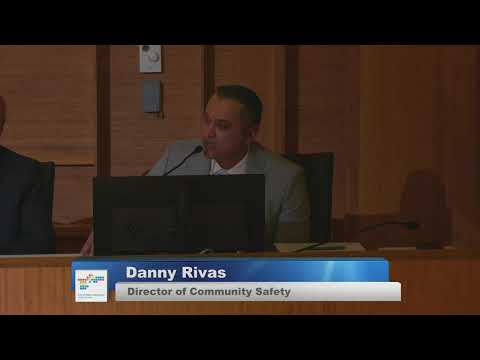
The West Hollywood Security Ambassador Program presented its April 2026 monthly update to the Public Safety Commission on June 8, reporting an average response time of seven minutes and 4,580 hospitality assistance contacts.
Program staff said ambassadors conducted 1,300 calls for service, made 1,050 referrals to the homeless concern line, handled more than 1,300 calls for service, and requested Los Angeles County Sheriff Department assistance 61 times. Staff also reported 100% staffing and training compliance for the month.
Members of the public described mixed experiences. Andy, who identified himself as a member of the houseless community, said some ambassadors are inexperienced and that encounters can feel intrusive (including staff photographing individuals). He urged hiring people with lived experience and better training on behavioral‑health conditions. Commissioners and other speakers echoed calls for improved training and for clearer metrics that would help staff and code enforcement schedule focused responses at peak hours.
Commissioners asked whether ambassador reports could include a specific incident category for youth on e‑bikes in Plummer Park; staff said they can add metrics and work with code enforcement to plan focused operations at peak times. Staff emphasized ambassadors are private security without citation authority; code enforcement or sheriff deputies must issue citations. Staff described successful weekend operations when code enforcement, deputies and ambassadors worked together and noted those deployments required multiple code officers and deputies to maintain a persistent presence.
Staff said they will explore adding incident tracking to ambassador reports, continuing bilingual outreach to vendors, and coordinating with code enforcement and sheriff deputies on focused operations during high‑traffic weekends and special events.