Get Full Government Meeting Transcripts, Videos, & Alerts Forever!
Get email alerts on the Municipal Budgeting topic
No spam. Unsubscribe anytime.
High Point council reviews proposed FY2026–27 budget as staff warns of sustained inflationary pressures
Summary
City staff told the High Point City Council that key operating costs have risen sharply since 2022 — from fire apparatus and fleet vehicles to health insurance — and presented a $5.4 million general capital plan and a set of fee and rate changes to close projected gaps.
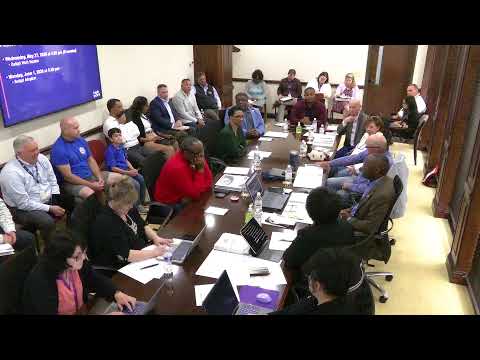
Mayor Serial Jefferson convened a special High Point City Council work session to begin review of the proposed FY2026–27 budget (item 2026-151). Budget and Performance Director Steven Howard led a presentation that framed a series of price increases as an “inflation impacts index” showing how selected municipal costs have changed since FY2022.
Howard told the council that some large items have risen markedly: “a fire apparatus in engine specifically in FY2022 it was about $750,000. We're expecting about $1.2 million for that same apparatus,” an increase he described as roughly 60 percent, and he said health insurance paid from the city’s health fund rose from about $17.9 million in 2022 to roughly $24.2 million planned for the coming year (about 35 percent). He used those examples to illustrate what he called the city’s "cost of doing business." (Steven Howard, Budget and Performance Director)
Why it matters: staff framed the index as a tool to show where inflation and market pressures are concentrated so the council can weigh potential revenue and spending choices in coming budget votes. Howard said general capital is proposed at about $5.4 million for FY2026–27 (roughly $4.5 million from the general fund), an increase of about $1.9 million year-over-year driven primarily by a downtown infrastructure and redevelopment project to fund parking improvements and downtown redevelopment.
The presentation reviewed the five-year capital improvement program across funds. Highlights included water-resources planning and smaller capital pots for recurring maintenance, targeted fire-station HVAC and restroom upgrades, parks deferred-maintenance projects (playground replacements and pool plastering), targeted bridge maintenance that will require coordination with railroads, an IT core-switch refresh that is cost-shared across enterprise funds, and elevator modernization at the Broad Street parking deck. Howard said electric capital is lower this cycle because a large EOC construction project is rolling off the prior-year budget.
Council members pressed staff on procurement and lead times for large equipment. Council Member Andrew asked whether the city is locked into a particular fire-truck manufacturer and how lead time affects replacement timing; Howard said the city commonly procures Pierce vehicles and cautioned that switching vendors could add maintenance and training costs. He also noted multi-year lead times mean the city sometimes operates equipment beyond its useful life while waiting for replacements.
Staff recognition and next steps: Howard recognized the budget evaluation team by name for preparing the materials and outlined the schedule for follow-up: a market-authority presentation at a special meeting, a public hearing at the next council meeting, a May 20 work session (and May 27 if needed), and tentative budget adoption on June 1.
The council offered questions on numerous line items and asked staff to return with more detail where year-over-year increases exceed roughly 15–20 percent. The work session closed without a formal vote on the budget; staff will bring additional information and the public hearing is scheduled at the council meeting noted in the calendar.