Get Full Government Meeting Transcripts, Videos, & Alerts Forever!
Get email alerts on the Housing Partnership topic
No spam. Unsubscribe anytime.
Oskaloosa and school district discuss land‑for‑lots housing partnership; several trade and cash options proposed
Summary
City staff presented multiple options for a proposed partnership with the Oskaloosa Community School District to secure about 16 buildable lots for the district’s building‑trades program in exchange for a 14‑acre school parcel and cash; the district signaled openness to negotiation but requested timelines, public RFPs and flexibility on payment terms.
City staff presented a concept the council previously directed staff to negotiate: the city would prepare about 16 buildable lots to sustain the school district’s building‑trades program. Staff estimated the city’s cost to be approximately $945,000. In return, the school district would transfer a 14‑acre Third Avenue West parcel and contribute $400,000 in cash, according to the city summary presented to council.
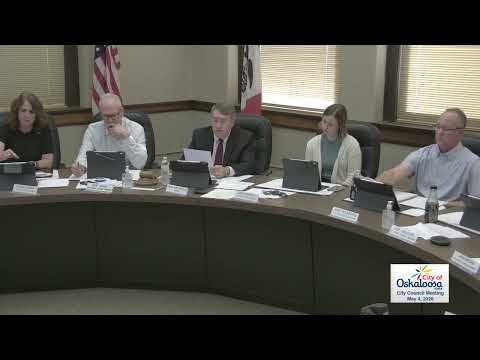
Superintendent Fischer told council the district appreciated the proposal and requested transparent, open‑session negotiation. "We're open to whatever you guys want to talk about," Fischer said, and asked that the district have flexibility on cash‑flow and repayment (he cited a potential three‑to‑five‑year payback window if the district were asked to increase its cash contribution). School‑board president Matt Sherlock added that the district’s building‑trades program is a long‑term community asset: "Our building trades program is probably one of the strongest programs in the state of Iowa," he said, urging a partnership that sustains the program for 15–20 years.
City staff presented three conceptual approaches: a cash‑heavy swap (higher district cash to achieve an even split), a park‑option that would rely on relocating Vanderwilt Park designation to other parcels (a route that could require moving federal park restrictions and an EPA/federal review), and an option focused on wastewater‑adjacent parcels. Staff noted floodplain constraints on portions of the school parcel and the need to reconcile appraised versus assessed values; an appraisal the district has is a few years old and the parties agreed valuation and any necessary RFP process would require further steps.
School leaders asked for a public RFP so other buyers have the opportunity to bid; they also asked staff to return to the district with concrete parameters. City staff said the federal/agency process to change park designations had previously taken as long as a year to 18 months and that staff would pursue the option of acquiring wastewater‑adjacent land if that proved more straightforward.
What happens next: City staff and the school district will continue negotiations; school leadership expects to discuss the matter at their next meeting and asked the city to return with more concrete parameters. No binding agreement was approved at the council meeting; council discussion and staff options preserve multiple pathways (cash swap, park designation/remap, or wastewater‑parcel trade) pending appraisal, RFP and federal‑process work.