Get Full Government Meeting Transcripts, Videos, & Alerts Forever!
Get email alerts on the Land Use topic
No spam. Unsubscribe anytime.
Mayors and county commissioners press ISC over Dino Solar extensions, citing growth and safety concerns
Summary
Town leaders and commissioners told the county commission they oppose further extension approvals for the Dino Solar project without a fresh review, citing changes to scope, wildfire and battery‑fire safety questions, impacts on town growth boundaries, and local emergency‑service costs.
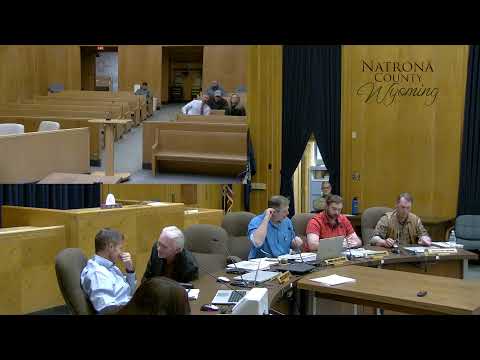
Mayors and residents from Bar Nunn and Mills urged the Natrona County Board of Commissioners on March 4 to press the Industrial Siting Council to revisit a previously permitted solar/battery project after the developer sought deadline extensions and scope changes.
"All of our winds come in from the west," said Peter Ber, mayor of Bar Nunn. He warned that repeated delays and a larger or altered footprint have created safety and planning concerns for towns that expected a different project. He flagged wildfire risk from potential battery fires and said the town had incurred costs (ambulance and fire equipment) in anticipation of development impacts.
Mills’ mayor said the project, as now proposed, blocks the town’s primary growth boundary and that the Industrial Siting Council (ISC) director’s approval process should not replace a fresh public review. "If the project is going to change materially, it needs to come back in front of us," the Mills mayor said.
Commissioners expressed similar unease. Several commissioners asked legal counsel to review options and directed staff to prepare a letter to state regulators outlining county concerns about multiple extensions and a materially changed scope. The board entered executive session earlier in the meeting for legal advice and reported afterward that staff would send a letter to the state requesting reconsideration and raising concerns about the speed and extent of scope changes.
County leaders asked the developer—if it intends to proceed in the changed form—to meet with affected towns, provide updated plans, and discuss possible mitigation or annexation options so local governments could secure public‑service benefits. Commissioners said they were not opposing renewable development as a principle but urged that projects be subject to timely, transparent reviews and that changes not be approved by isolated administrative extensions without renewed local engagement.
The county said it would coordinate with local jurisdictions on a joint response to the ISC.