Get Full Government Meeting Transcripts, Videos, & Alerts Forever!
Get email alerts on the Microtransit topic
No spam. Unsubscribe anytime.
Pay County launches microtransit pilot to expand rides for seniors and low‑car neighborhoods
Summary
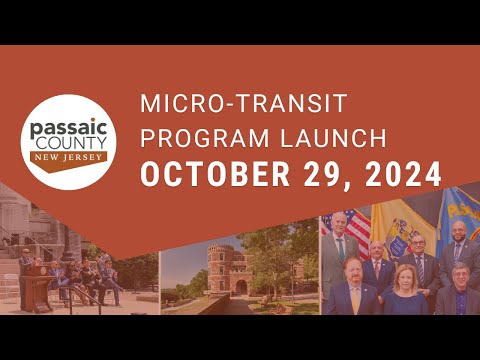
County officials unveiled "Pay County Move," a mid‑2025 microtransit pilot for Pic and Clifton that will offer app and phone booking, wheelchair‑accessible rides and a roughly 10‑vehicle minivan fleet; state lawmakers said $750,000 in state support helped start the pilot.
Pay County officials and municipal leaders announced a pilot microtransit service, "Pay County Move," aimed at improving first‑ and last‑mile connections and providing on‑demand rides for seniors, residents without cars and people with disabilities.
"This program provides and will offer paratransit and microtransit to the whole area," said Gary Sher, president of the city council of Pic, citing the city’s large senior population and low car ownership as central needs the service will address. Assemblyman Cali, chair of the transportation committee, said the state budget includes a $750,000 appropriation to support the system. "We sponsored legislation to expand microtransit systems across the state…we're especially proud to have worked…to deliver a state budget appropriation of $750,000 to support this microtransit system," he said.
John Bartlett, director of the Pay County Board of County Commissioners, said the pilot will focus on Pic and Clifton and aims to launch around mid‑2025. "When we talk about microtransit we're not just talking about consumer convenience — we're talking about congestion, the environment and cost to families," Bartlett said, adding the county is partnering with technology and operations provider Via.
Eric Gardner, who leads East Coast Partnerships at Via, described how riders will book trips. "Anyone within a zone will be able to book a low‑cost shared ride," Gardner said. He said booking will be available through a white‑labeled Pay County Move mobile app or by phone for riders without smartphones; wheelchair‑accessible vehicles will be available upon request and the service will match multiple passengers via smart routing to nearby virtual stops.
Ricardo Fernandez, the city’s business administrator and executive director of the Redevelopment Parking Authority, said the city will also roll out complementary services: a free shuttle expected to begin next month for residents and a bike‑share program planned for early next year. "Getting our residents that don't have vehicles to essential services such as doctor appointments or the supermarket is critical," Fernandez said.
Officials said some details remain to be finalized for the pilot. Via said the initial fare structure has not been set; payment options under consideration include credit/debit in the app and options for cash users (prepaid cards or cash on board) so unbanked riders can participate. Via estimated the initial fleet for the pilot will be roughly 10 wrapped minivans, with wheelchair‑accessible vehicles available by request.
During a public Q&A session, commissioners and attendees pressed officials on language access, driver recruitment and safety. County Commissioner Orlando Cruz asked about Spanish‑language access; Gardner said the rider app and call‑center support will be available in Spanish and other languages as needed. On local hiring, Via said many deployments see a high share of drivers recruited from host communities and that the county and cities will publicize opportunities.
Officials described the pilot as scalable if demand warrants. Panelists cited similar services in other New Jersey municipalities, including Camden, Jersey City and New Brunswick, and said federal and regional funding partners have supported related connectivity projects. The event closed with officials inviting further community input as implementation details — such as exact fares, final fleet size and specific virtual‑stop locations — are finalized ahead of the mid‑2025 launch.