Get Full Government Meeting Transcripts, Videos, & Alerts Forever!
Get email alerts on the Transportation Pedestrian Bridge topic
No spam. Unsubscribe anytime.
Council rejects effort to halt I‑41 pedestrian bridge after wide public support; motion fails 6‑1
Summary
After more than an hour of public testimony and council debate, the Oshkosh Common Council voted 6‑1 against a resolution to stop advancement of the I‑41 pedestrian bridge project, with speakers and several council members citing safety, federal grant funding and long‑term walkability goals.
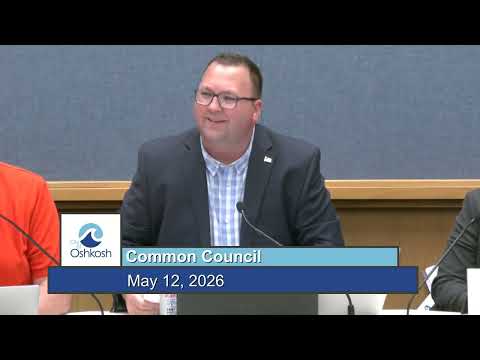
The Oshkosh Common Council on May 14 voted down a resolution that would have stopped work on the long‑planned I‑41 pedestrian bridge, after residents, advocates and several council members urged the city to move forward.
Supporters said the bridge — largely grant funded — would improve safety and connectivity across a highway corridor that residents described as a barrier to walking and biking. “This pedestrian bridge is about the safety in our community,” said Deb Martin, a member of the City Transportation Advisory Board, arguing that federal funding for construction would be lost if the city abandoned the project. Multiple speakers, including students and business owners, said they or people they know had experienced collisions while bicycling in Oshkosh.
Opponents raised concerns about cost, location and long‑term use. Paul Eslinger, the resolution’s sponsor, said the city would shoulder upfront costs and future maintenance and questioned whether the bridge location would be used enough to justify its expense: “Why would you pay money that’s not going to benefit you?” he said, adding that the city’s share could grow when acquisition, infrastructure and financing costs were tallied.
Council members framed the dispute as a choice about priority and risk. “We literally have people dying crossing 41,” Council member Stevenson said, calling the crossing a high‑injury corridor for pedestrians and bicyclists and arguing the city would not get a better funding opportunity. Other council members noted the bridge’s place in long‑standing bike‑and‑pedestrian planning documents dating back to 2011 and emphasized federal grant conditions (including ADA and environmental requirements).
The motion to direct staff to stop further advancement of the project failed on a 6‑1 voice vote (Aye: Eslinger; No: Amos, Bulow, Stevenson, Lafever, Spannbauer, Moverauer). Council members and staff said next steps — including grant acceptance, acquisition and bid awards — will return to council for final approvals.
The debate underscores differing views on balancing one‑time grant opportunities and upfront municipal costs against long‑term safety and walkability investments. The council did not set a new timetable for specific construction milestones that night.