Get Full Government Meeting Transcripts, Videos, & Alerts Forever!
Get email alerts on the Signs topic
No spam. Unsubscribe anytime.
Bel Air residents oppose digital monument sign; St. Tammany BOA denies variance
Summary
Bel Air HOA sought permission for an internally illuminated digital monument sign at the subdivision entrance. Residents delivered a petition and voiced opposition citing canopy preservation, aesthetics, redundancy with existing alerts and potential visibility concerns; the board denied the variance.
The St. Tammany Parish Board of Adjustment denied a request to install an internally illuminated digital monument sign at the Bel Air subdivision entrance after residents presented a petition and spoke against the proposal.
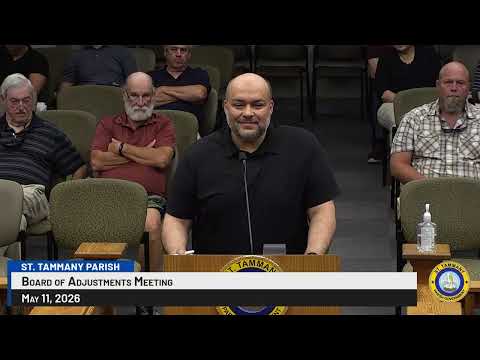
Jim Moberly, who identified himself as the Bel Air HOA president, told the board the sign would allow remote message updates and improve speed of communicating boil-water notices, permit alerts and other community messages. Moberly said the company they consulted offers automatic dimming and that the HOA was still finalizing sizing and resident outreach.
Several residents urged denial. Margaret Tingle delivered a petition signed by multiple neighbors and told the board the development’s entrance is lined with mature crape myrtles and oak trees that create a park-like canopy; she said a three-by-six illuminated LED sign would be “completely out of character with the ambiance created.” George Haas and other speakers added that existing channels (government TV, parish notifications and mobile alerts) already provide emergency notices, that the sign felt commercial, and that many residents had not been presented a final plan for a vote.
Board members probed technical matters (FAA clearance, dimming, content limits under the Unified Development Code) and precedent concerns. Mr. Swindell and other members said they were sympathetic to the HOA’s desire to notify residents but warned that approving an internally illuminated, changeable message sign at a residential entrance would set new precedent inconsistent with current UDC sign standards. After debate, the board moved to deny the variance; the motion carried and the application was denied.
The HOA may instead pursue a standard sign permit that complies with current UDC limits on illumination and variable-message content, or return with a revised design and documented resident approval.