Get Full Government Meeting Transcripts, Videos, & Alerts Forever!
Get email alerts on the Homelessness Services topic
No spam. Unsubscribe anytime.
Residents with lived experience urge more human connection, mental-health outreach and smoother agency coordination
Summary
Three community members who have experienced homelessness told a moderated panel that case managers, peer counselors and simple human connection were central to finding housing. They urged improved mental-health outreach, reduced repetition of trauma across agencies and greater inclusion of people with lived experience in program design.
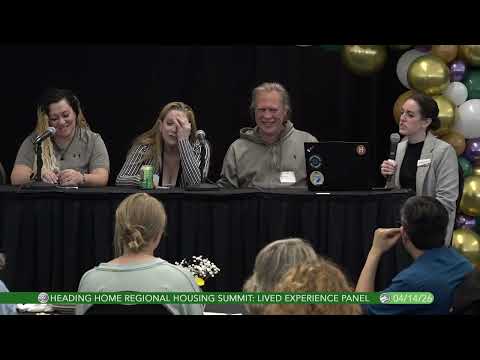
Aaron Reynolds Nland, introduced as Heading Home's housing solutions director, moderated a panel of three community members who have experienced homelessness and described what helped them move into stable housing and what still needs to change.
The panelists—Mandy New, William Corbin and Angie Reid—said direct human support from case managers, practical help such as rides and meals, and peer encouragement were decisive in their recovery and return to housing. Mandy New, a community member invited to speak about her experience, described camping while unhoused for about two and a half years and said that “the resources were there, but they weren't always easily accessible” when someone lacks transportation or a phone.
The panelists urged agencies and community members to prioritize relationships as much as paperwork. William Corbin described meeting a caseworker at an outreach event who helped him apply for the Section 8 waiting list; being accepted onto that list and subsequent program supports, he said, shifted his situation toward stability. A panelist named Rosyn Doyle was singled out by one speaker as a caseworker who provided key encouragement during outreach.
Panelists also identified gaps. Several said mental-health outreach is insufficient and that people who self-medicate on the streets often do not seek help; they recommended expanding peer-to-peer counseling programs and increasing frontline staff capacity to engage people where they are. One speaker urged that peer counseling programs, including certification pathways run by local organizations, could be scaled without requiring full clinical credentials.
Another recurring concern was the trauma of repeating one's history to multiple providers. Panelists described the emotional toll of having to rehash traumatic experiences at each intake and called for better agency communication and more effective, privacy-conscious use of shared client records so people do not have to relive their stories repeatedly.
When asked what frontline staff and policymakers should hear most clearly, panelists summed up the message simply: “We're people, too.” They asked agencies to keep doors open, be patient, and include people with lived experience in program and policy design. The session ended with applause for the panelists and no formal actions were taken.
The panel emphasized concrete, implementable changes—expanded peer counseling, more proactive mental-health outreach, simpler access logistics (transportation, phone access), and better coordination among providers—as priorities for improving housing stability for people experiencing homelessness. The organizers closed the session after audience applause, with no vote or formal motion recorded.