Get Full Government Meeting Transcripts, Videos, & Alerts Forever!
Get email alerts on the Compensation topic
No spam. Unsubscribe anytime.
School committee debates three-tier paraprofessional pay proposal and budget trade-offs
Summary
Committee members discussed a proposal to classify paraprofessionals into three tiers, with a suggested $150 base increase and alternative lower options; staff warned the district's attendance bonus and step increments complicate budget calculations and pay outcomes.
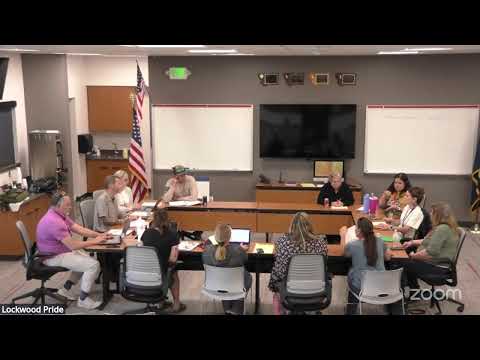
A school district negotiation committee meeting examined a proposed three-tier classification for paraprofessionals and the budgetary impact of adding a flat pay increase.
A presenter leading the discussion described the three tiers (referred to in the transcript as "par one," "par two" and "par three") as a way to separate roles and duties. "Par ones would do no crosswalk or bus" unless it is on their schedule, the Presenter said, while "par twos" would be expected to cover bus duty, recess, crosswalks and subbing when needed. The Presenter emphasized that life-skills staff would require legal and proper training for specialized duties such as toileting and tube feeding and that life-skills paras would still need to spend a minimum number of periods in the life-skills room to qualify for higher pay.
Committee members asked for operational safeguards. A Questioner said staff should limit consecutive days a para can be pulled from their classroom "because that will pull us from our students that we're supposed to be working with," citing continuity concerns for students with individualized education programs. Presenters and committee members discussed school-to-school differences in schedules and the practical difficulty of moving paras between buildings.
On compensation, the group discussed alternatives including a $150-a-month addition to base pay, a $125 option and smaller per-hour adjustments. The transcript includes a spreadsheet example that the group cited as producing a subtotal of $75,117 for one scenario; staff warned that adding a flat dollar amount interacts with long-standing step increments in the district pay matrix, which can change the effective percentage increase. "If you put a $150 on there, it comes out to a 9% raise because at the bottom of it, it's going to be even more than that," a Staff member explained during the meeting. Committee members asked staff to provide the underlying calculations and the payroll software view they used to generate the matrix figures.
The committee also discussed the district's attendance bonus and whether that funding (cited in the meeting as about $60,000 set aside for an attendance bonus) could be reconfigured. Staff noted one approach would be to move the bonus into base pay for those who currently earn it; presenters said that would reduce the pressure on employees to come to work sick because the money would be built into salary rather than earned only by meeting attendance criteria. Members pointed out insurance cost increases could offset some of the raise for affected employees and requested clearer net-pay examples.
No formal motions or votes were taken at the meeting. Committee members agreed to refine the written language for the tiers, have staff run budget scenarios (including a lower across-the-board option such as a $0.75-per-hour increase), survey paraprofessionals to estimate how many would sign up for each tier, and reconvene to review the numbers and finalize wording. The group discussed possible meeting dates (participants referenced Thursday the 21st as an option).