Get Full Government Meeting Transcripts, Videos, & Alerts Forever!
Get email alerts on the Energy And Digital Infrastructure topic
No spam. Unsubscribe anytime.
Linn County planners weigh stricter rules for data centers, decommissioning and on‑site power
Summary
Planning commissioners reviewed red‑line Energy & Digital Infrastructure rules, agreed to remove an obsolete cross‑reference, debated fuel and coolant containment rules tied to zoning code 16‑407 and NFPA 30, and proposed an ad hoc decommissioning committee and stronger bond language for large technical facilities.
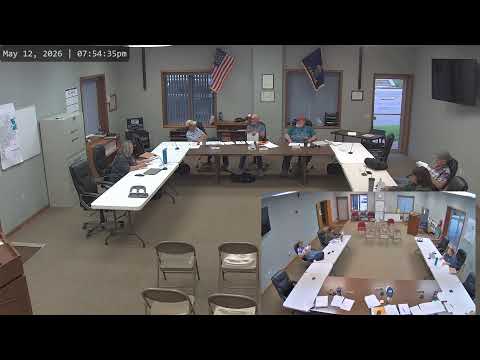
Planning and zoning commissioners in Linn County spent their workshop refining a red‑line draft of new Energy and Digital Infrastructure regulations, focusing on operational standards, hazardous‑material safeguards and financial assurances for large technical facilities.
The panel identified an obsolete cross‑reference in section 25503 and agreed to delete or replace the citation so operational transparency and reporting requirements remain covered elsewhere in the code. Commissioners agreed the draft should explicitly reference the county’s existing bulk‑fuel storage rules (zoning section 16‑407) to ensure tanks trigger appropriate conditional‑use review and berming requirements.
Staff explained that 16‑407 requires conditional‑use review for many industrial tanks (the draft treats business/industrial installations differently from agricultural ones) and that berms or containment sized to at least the largest tank’s capacity are standard. Commissioners said the revisions should make clear when the county will require those containment measures for data centers and co‑located battery systems.
The group also reviewed coolant management for closed‑loop systems, noting different glycol types have different toxicity profiles and that disposal must comply with local, state and federal hazardous‑waste rules. Members referenced the Flammable and Combustible Liquids Code (NFPA 30) as the national standard they rely on for classifying and handling glycol and agreed to add disposal and storm‑water protections that prohibit discharge into drains or waterways.
On decommissioning, commissioners proposed an ad hoc committee — appointed by the county commissioners — to review site‑specific decommissioning plans rather than imposing a single prescriptive solution. The committee would have discretion to require removal of buildings, equipment or other site‑specific measures depending on reuse potential, contamination risk or marketability. Several members stressed the need for robust financial assurances and said they will seek outside expert advice on bond language and whether a pilot fund or payment‑in‑lieu approach is permissible under state law.
Members also discussed a draft requirement that high‑electrical‑load computing facilities provide on‑site generation capable of meeting 100% of peak demand (a behind‑the‑meter standard). Several said the requirement is becoming more common elsewhere and could reduce strain on local distribution, but they acknowledged it is a significant ask and may require further technical and legal review.
Next steps: staff will seek expert input on bonding and pilot‑fund legality, update the red‑line draft to remove the obsolete cross‑reference and add explicit cross‑references to existing fuel‑storage and hazardous‑materials codes, and circulate a new red‑line copy before the next meeting. Commissioners also noted a countywide one‑year moratorium on technical facilities gives them time to refine the rules before adoption.