Get Full Government Meeting Transcripts, Videos, & Alerts Forever!
Get email alerts on the Foreign Policy National Security topic
No spam. Unsubscribe anytime.
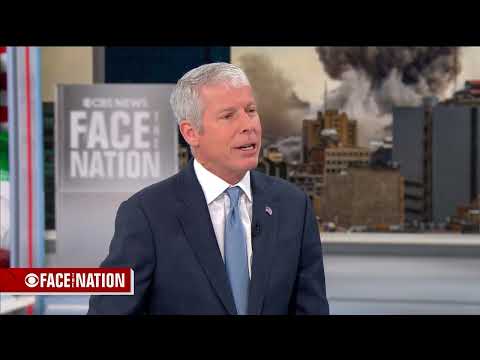
Energy Secretary Chris Wright says DOE ready to handle Iranian nuclear material; U.S. is clearing Strait of Hormuz
Summary
Secretary of Energy Chris Wright told interviewers the Department of Energy has the nuclear expertise to handle Iranian enriched material, that removal by multiple actors (including the IAEA or the DOE) is possible, and that U.S. forces are actively working to clear the Strait of Hormuz while negotiations continue.
Energy Secretary Chris Wright said the Department of Energy has the technical capacity to handle Iranian enriched uranium and that the U.S. military is actively working to clear the Strait of Hormuz to reestablish commercial shipping.
Wright told the Questioner that the United States’ objective is to end Iran’s nuclear‑weapons capability and that removing enriched material from Iran is central to that goal. “The nuclear expertise in the United States is within my department. They are ready,” he said, adding that removal could be done by the International Atomic Energy Agency, by DOE teams, or by other partners depending on circumstances.
Wright described Iran’s enrichment level as about 60 percent—near weapons grade—and told the interviewer the transcript records his statement that Iran “has nearly a,000 pounds of uranium enriched to 60%.” The interview does not provide a fully clear numeric figure for the quantity; Wright emphasized the need to remove the material regardless of the specific tonnage.
On maritime security, Wright said the U.S. is blocking traffic to and from Iranian ports while Iran continues to harass other shipping. He said U.S. forces were “actively clearing the straight today” to restore the free flow of commercial traffic. He explained the United States paused an operation called Project Freedom at Pakistan’s request but kept military options open: if negotiations fail or a negotiated path appears unlikely in the coming days, he said, military efforts to reopen the strait would resume.
Wright also described stepped‑up economic pressure aimed at the Islamic Revolutionary Guard Corps (IRGC), saying U.S. operations were collecting assets the IRGC had moved abroad to increase pressure on Iran’s leaders to negotiate. He acknowledged short‑term disruptions to energy markets are likely and declined to predict whether gasoline or airline ticket prices would fall this summer.
The interview ended with Wright reiterating that ending Iran’s enrichment activities is the primary objective and that multiple removal and verification paths remain on the table. Wright thanked the interviewer for the opportunity to speak.