Get Full Government Meeting Transcripts, Videos, & Alerts Forever!
Get email alerts on the Iran Negotiations topic
No spam. Unsubscribe anytime.
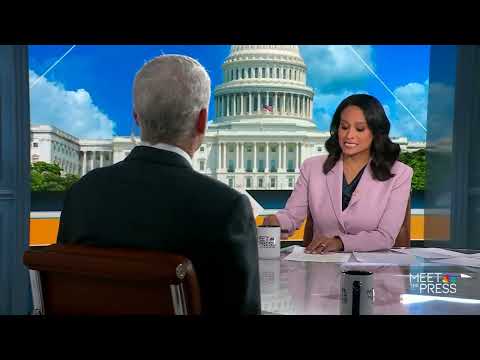
Secretary Chris Wright says ending Iran’s nuclear program is U.S. priority before reopening Strait of Hormuz
Summary
On Meet the Press Secretary Chris Wright said the administration’s 'end point' is both restoring free passage through the Strait of Hormuz and ending Iran’s nuclear program; he described a U.S. blockade, said Project Freedom was briefly suspended to allow negotiations, and warned military options remain available.
Secretary Chris Wright told Meet the Press that the administration’s top objective in talks with Iran is "an end to the Iranian nuclear program" and restoring "free flow of traffic through the international waters that are the Straits of Hormuz." He said interim steps are possible but the two outcomes are the stated end points.
When asked who controls the Strait of Hormuz, Wright said, "Well, the United States has a blockade. We are not allowing any ships to come out from Iranian ports or to go into Iranian ports," and added that U.S. forces have escorted American vessels. He said the United States would "use military force to open the straight to everyone" if a negotiated settlement fails.
Wright described the recent fighting as having moved through its main military phase and said U.S. planners are now using economic leverage while negotiating. On a plan announced by the president called Project Freedom — an operation to escort ships trapped in the Persian Gulf through the strait — Wright said the operation was "suspended briefly" because Iran asked to negotiate, quoting Iranian interlocutors as saying, "Wait, wait, wait. Let's talk." He characterized a negotiated settlement as the preferable outcome.
Throughout the interview, Wright framed reopening the strait and blocking Iran’s nuclear program as linked problems: he said denying Iran a pathway to build nuclear weapons would reduce the long-term risk to global energy flows. He also defended the sequence of U.S. actions, saying the United States prioritized degrading Iran’s military and industrial capabilities before focusing on immediate maritime escorts.
The moderator noted reporting that Project Freedom was halted after Saudi concerns that the operation could trigger further attacks; Wright characterized the pause as tactical, intended to preserve negotiating leverage. The interview did not produce a detailed timetable for reopening commercial shipping lanes, and Wright repeatedly declined to make specific short-term predictions about how quickly maritime traffic or global energy markets would normalize.
The interview concluded with Wright reiterating that military options remain on the table while negotiations proceed and that the administration sees restoring free navigation and preventing a nuclear-armed Iran as the strategic end points.