Get Full Government Meeting Transcripts, Videos, & Alerts Forever!
Get email alerts on the Phone Policy topic
No spam. Unsubscribe anytime.
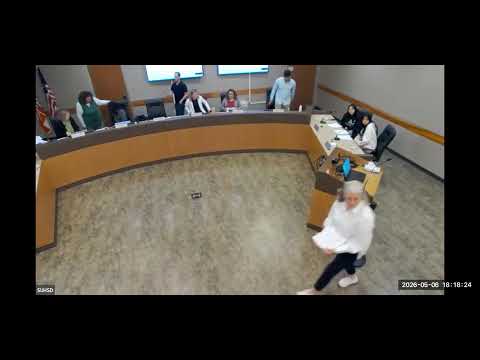
Trustees weigh AB 3216 options as community splits over full‑day phone ban and safety
Summary
Board staff presented AB 3216 options — full‑day bell‑to‑bell ban (Option A) or classroom/instructional restriction (Option B) — and trustees heard more than two hours of public comment. Students and many parents favored Option B; teachers and health professionals gave mixed testimony on safety, mental health, enforcement and accommodations. The board signaled preference to adopt a consistent classroom‑time restriction in June and study full‑day approaches later.
Trustees discussed how to implement California’s new law on student smartphone use after district staff presented two options required by AB 3216: a full‑day, bell‑to‑bell ban (Option A) or a restriction limited to class/ instructional time (Option B). Staff summarized two stakeholder surveys and local implementation considerations ahead of a planned policy vote this summer.
Why it matters: the board must adopt a policy under AB 3216 that balances classroom focus, student mental health, emergency communications, and required accommodations for medical needs or IEP/504 plans. Parents and staff told trustees the choice has real consequences for safety, student socialization and equity.
School staff member Jared Douly, presenting the district’s analysis, summarized the legal requirement and its intent: “Assembly Bill 3216 requires every California school district … to adopt a policy that limits student smartphone and device usage during the school day,” and noted the legislation requires stakeholder input and a five‑year review cycle. He presented two survey rounds and draft implementation steps, including first and second readings in June and implementation planning over the summer.
Public testimony spanned the spectrum. Teachers and local clinicians urged a stricter approach to reduce social‑media harms and improve student focus. “A 7‑hour break from their cell phones is a highly cost‑effective way to address the mental‑health challenges,” said Sequoia teacher Stacy Wenszel, who identified herself as a parent and teacher and called for full‑day removal of phones during school hours. A local pediatrician read a joint clinical endorsement for a bell‑to‑bell phone‑free policy, citing effects on attention and social‑emotional development.
Students, many parents and some staff urged caution. Multiple student speakers and high‑school parents said phones are integral to submitting work, scheduling and contacting family; several parents said removing phones would hinder emergency contact and create practical enforcement problems. Freshman Katya Chikov said phone use is often academic or logistical — “Phones are calendars. They are study guides. They are cameras to submit assignments.” Several parents favored Option B or hybrid approaches that combine classroom restrictions with accessible phone access at passing periods and lunch.
Survey results and staff summary: staff reported that in the district’s spring survey students favored Option B by a wide margin (students: ~93% for classroom/instructional restrictions), staff responses leaned toward Option A (a majority supporting a stronger restriction), and parents were split (about 52% for Option B, 46% for Option A in the reported sample). Staff emphasized the importance of procedures for exceptions (medical documentation, IEP/504, emergency use), communications, training, and addressing inequities such as possible rises in 504 requests for device access.
Board direction and next steps: trustees debated enforcement, staffing impacts and the short timeline to put procedures into place. Several trustees said they favored adopting a district‑wide, classroom‑time restriction (Option B) at the June readings to create consistent expectations across sites, while leaving Option A as an aspirational goal to revisit if pilots and procedures indicate it is feasible. Staff said a draft board policy would be brought for first reading on June 10 and second reading toward the board’s June 17 meeting, with implementation planning over the summer.
What remains unresolved: enforcement details (pouches, caddies, honor system), discrete accommodations for students with IEP/504 or medical needs, technology workarounds (tethering, school‑issued devices), and how to address parents’ emergency‑contact concerns without degrading emergency‑services communications. Trustees asked staff to return with cost estimates, implementation options and evidence from other districts’ experience.
The board paused the phone‑policy discussion after extensive public comment and directed staff to bring a draft policy and implementation plan in June for formal action.