Get Full Government Meeting Transcripts, Videos, & Alerts Forever!
Get email alerts on the Cannabis Regulation topic
No spam. Unsubscribe anytime.
Senate passes overhaul of cannabis rules after tight floor votes on potency, location and business caps
Summary
The Minnesota Senate passed Senate File 4401 on May 12, 2026, approving a package of cannabis regulatory changes that streamline licensing and product standards while preserving medical-patient protections; the final vote was 34–33 after contentious floor amendments on potency, flavors and canopy limits.
The Minnesota Senate passed a comprehensive package to refine cannabis regulation on May 12, approving Senate File 4401 after a day of intense floor debate and roll-call votes.
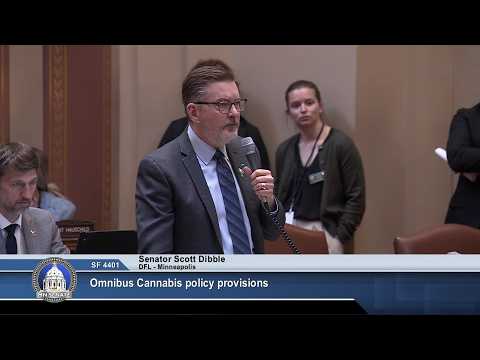
Sen. Steve DIBBLE, the bill’s sponsor, said the measure consolidates licensing, clarifies Office of Cannabis Management (OCM) authority on labeling and enforcement, and seeks to integrate medical and adult-use supply chains while preserving patient protections. He described the bill as intended to stabilize markets and reduce costs for consumers.
The bill’s path included multiple high-profile amendments. Sen. Carrie NELSON proposed location buffers and additional protected sites (A20), which the author accepted as a friendly amendment. Nelson also offered A17, a ban on flavored cannabis products and marketing features appealing to children; that amendment was rejected in a roll call (23–14 on the A17 roll call reported during floor action).
A divided amendment from Nelson on potency and labeling (A21) produced split results: the warning-label and poison-control information portion passed, while the proposed potency caps for certain product classes failed in a separate roll call. Nelson urged limits such as a 30% cap on adult-use concentrates and a 15% cap on flower, citing medical literature; supporters pointed to studies linking higher THC with increased adolescent harm, while opponents emphasized OCM’s role in rulemaking and concerns about medical-patient access.
A major floor fight centered on cultivation ‘‘canopy’’ limits. Sen. RASMUSSON offered A15 to preserve the larger canopy allowances for existing medical cultivation businesses so as not to disrupt investments made under prior law. After prolonged debate and an oral change reducing the proposed cap from 90,000 square feet to 45,000 square feet for certain macro licenses, the amendment as amended was adopted. Supporters said it preserves jobs and honors prior investments; critics warned the change favors incumbents and expressed concern about market concentration and tribal compacts that the Legislature cannot control.
The Secretary took the roll on final passage after amendments were resolved; the bill passed by one vote, 34 yeas to 33 nays. The bill includes expanded labeling standards, strengthened age-compliance checks and a framework to allow certain licensed businesses to integrate medical and adult-use operations while maintaining patient protections.
Sen. DIBBLE said the bill also includes a modest psilocybin therapeutic-use study provision, which will be monitored for federal funding opportunities and annual reporting to the Legislature. The next procedural step is transmission to the House conference or reconciliation process as required.
Votes and specific amendment outcomes were recorded on the Senate floor; the bill passed and its title was agreed to.