Get Full Government Meeting Transcripts, Videos, & Alerts Forever!
Get email alerts on the Education Technology topic
No spam. Unsubscribe anytime.
Board debates limits on classroom screen time after staff survey; member urges K–5 review
Summary
Administrators presented a staff survey showing most elementary instruction remains paper-based, while middle/high school use varies; board members urged an evidence-based review focused on K–5 and discussed the logistics and cost of tracking per-student screen time.
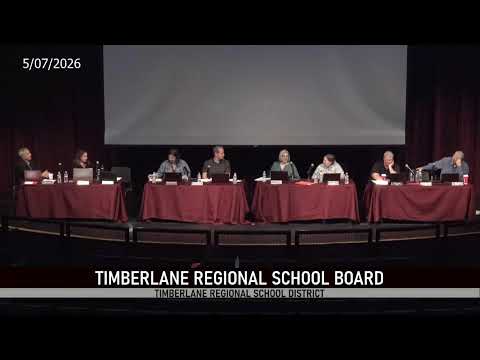
At a Timberlane Regional School District school board meeting, administrators presented results of a staff survey on student screen time and device use, prompting board members to press for a focused review of K–5 practices.
Sandy (administrative staff) said the district surveyed 347 instructional staff and received 266 responses (a 77% response rate). The presentation showed that at the elementary level teachers most often reported 0–10% of class time spent on screens, and that paper-based reading and writing materials still predominate in early grades. "This was our first-blush attempt to get that high-level information," Sandy said, adding the survey was intended as a starting point for further research and discussion.
Board member Jack presented his own review of national research and a recent bipartisan Senate hearing, arguing that "paper wins on comprehension" and that younger students show more pronounced negative effects from excessive screen use. "If our goal is maximum comprehension, strong literacy, and long-term academic success, we should adjust based on the evidence," Jack said, urging a K–5 emphasis.
Administrators and several board members stressed the tension between reducing non-essential screen time in early grades and meeting state requirements that certain assessments be administered digitally. Justin (administration) noted the district must maintain digital skills and provide devices for state- and federally-required tests, but said instructional design can preserve tactile, paper-based experiences where research suggests they are most beneficial.
The board also discussed the district's technical capacity to measure screen time. Mr. Henderson (technology staff) said the district currently uses web-filtering software but does not have per-student screen-time logging. He said the system the district pays for now (Bark Technologies) costs "about $115" (as described in the presentation) and that a pilot the district evaluated (GoGuardian) was in the mid‑$20,000s — a difference the administration said challenged budget feasibility. "We did look at another program. It was about twice as much," Mr. Henderson said.
Board members asked for follow-up detail on costs, potential pilot options, and how any monitoring would respect student privacy while informing instructional decisions. Several members—echoing the presenter’s call for more data—favored convening parents, teachers and experts to weigh trade-offs and report back with concrete recommendations before any policy change. Sandy said the presentation was intended as "a jumping-off point" and invited further analysis.
Outcome and next steps: No formal policy change was enacted at the meeting. Board members asked administration to return with more detailed cost estimates for monitoring tools, options to pilot time-limited tracking, and a plan that would balance digital assessment requirements with reduced screen exposure in early grades.