Get Full Government Meeting Transcripts, Videos, & Alerts Forever!
Get email alerts on the Homelessness topic
No spam. Unsubscribe anytime.
Local volunteers urge county action on homelessness and shelter gaps
Summary
Volunteers and residents described high unsheltered rates in Martin County, gaps in shelter capacity—especially for men—and urged the county to pursue options such as designated campground or safe‑parking sites; commissioners pointed to human services staff engagement but noted legal and statutory constraints.
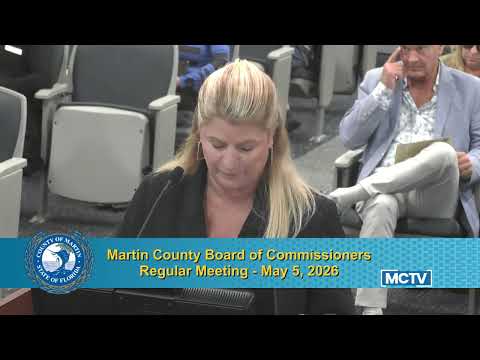
Multiple speakers during public comment on May 5 told the board Martin County faces a growing unsheltered population and urged concrete county action to provide temporary shelter, safe‑parking and services.
Angela Harrison, a Tent City Helpers volunteer, said the county has near‑record unsheltered numbers, limited shelter options for men, and frequent incidents where people were trespassed without alternatives. "We need to provide basic shelter for the most vulnerable — it is inhumane and callous to ignore the residents of our county," she said, urging commissioners to consider options such as using the fairgrounds as a temporary campground.
Justin Ducas, who described himself as unhoused on many consecutive nights, cited House Bill 1365 and public remarks by the governor about available state funding for shelters and asked how many more nights people will have to risk criminalization before local action occurs. Dukcas asked the board to place the topic on a future agenda for formal discussion.
Commissioners and staff responded that the county’s human services department is actively engaged with nonprofit partners and that state statute constrains local options for overnight camping and shelter siting. County staff noted the legal complexity of establishing sanctioned camping or parking areas, potential liabilities, zoning considerations and the need for careful program design. Chair and staffing follow‑up was offered: human services staff had already been in contact with several speakers and will continue outreach.
Speakers urged a county‑led strategy that clarifies available services, identifies funding streams and explores safe‑parking or sanctioned camping models that comply with state law and minimize neighbor lawsuits; commissioners asked staff to report next steps through the appropriate department.