Get Full Government Meeting Transcripts, Videos, & Alerts Forever!
Get email alerts on the Environmental Review topic
No spam. Unsubscribe anytime.
Draft EIR for O'Brien/Willow life‑science campus flags unavoidable GHG impact; public raises biosafety and traffic concerns
Summary
The Planning Commission received public comment May 4 on the draft EIR for a proposed life‑science campus on O'Brien Drive and Willow Road. Dudec found greenhouse‑gas impacts tied to proposed natural‑gas HVAC for lab spaces to be significant and unavoidable; residents urged all‑electric design and asked the city to limit or require review for high‑biosafety labs near schools.
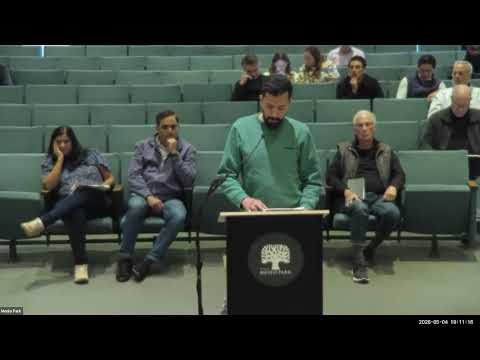
The Planning Commission held a public hearing and study session on the draft environmental impact report (EIR) for a proposed two‑building life‑science campus at 995–1005 O'Brien Drive and 1320 Willow Road on May 4, 2026. The draft EIR identifies multiple mitigation measures but concludes greenhouse‑gas emissions from proposed natural‑gas infrastructure for lab HVAC would be a significant and unavoidable cumulative impact.
Katherine Waugh, senior project manager for consultant Dudec, told the commission that most environmental topics in the draft EIR can be mitigated to less‑than‑significant levels with required measures (air‑quality controls, health‑risk management during construction, noise mitigation, hazardous‑materials procedures and tribal cultural resource conditions). However, on greenhouse gases she said: “this is the one topic in which we found significant and unavoidable impacts, and that's around greenhouse gas emissions,” primarily because the draft project proposes natural gas for some lab conditioning needs and there was no feasible mitigation to fully eliminate those emissions.
Public speakers urged the city to require all‑electric designs and to limit potentially higher biosafety level (BSL‑3/4) research near residences and schools. John McKenna urged all‑electric options pointing to other Bay Area lab projects that have pursued electrification. Resident Naomi Goodman asked the commission to bar BSL‑4 and require strict conditional review for BSL‑3 given proximity to Mid‑Peninsula High School and childcare facilities; she said the draft EIR anticipates BSL‑1 and BSL‑2 uses but “doesn't preclude BSL‑3 or BSL‑4 labs.”
Applicant Tarleton Properties and the project’s architectural team described site layout, public open space, tree‑line and streetscape improvements, and campus TDM and shuttle programs; the applicant said some lab HVAC needs currently rely on natural gas and that all‑electric lab solutions remain experimental at the scale and reliability required by mission‑critical research tenants. Project representatives also described phased parking to match leasing and tenant transitions and offered to continue work on TDM measures and native landscaping by the creek.
Commissioners asked for additional detail in the final EIR on feasible electrification pathways, hazardous‑materials management and enforcement, construction phasing to preserve active transportation access, and how alternatives might reduce unavoidable GHG impacts. The public comment period for the draft EIR remains open through May 18, 2026; staff will prepare responses to comments and bring a final EIR and entitlements back to the commission for certification and decision on project approvals.