Get Full Government Meeting Transcripts, Videos, & Alerts Forever!
Get email alerts on the Antisemitism And Government Response topic
No spam. Unsubscribe anytime.
DOJ official warns of rising antisemitism; State Department leaders stress preserving historical truth
Summary
At the Federal Interagency Holocaust Remembrance Program, Assistant Attorney General Harit Dylan warned of a resurgence in antisemitism and promised aggressive enforcement; the State Department emphasized preserving historical truth and using new technologies responsibly.
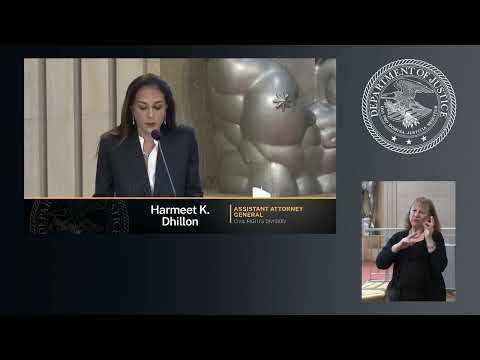
Assistant Attorney General Harit Dylan told attendees at the 33rd Federal Interagency Holocaust Remembrance Program that antisemitism is rising in the United States and abroad and that the Department of Justice will act to protect Jewish Americans.
Dylan described the Holocaust as an incremental process of exclusion and warned that similar patterns are reappearing: “We are experiencing a rise in anti-semitism globally, including right here at home,” she said, citing examples from campuses and public violence. She added that some perpetrators cloak hateful ideas in intellectual language and emphasized enforcement: “We are and will continue to aggressively prosecute individuals and organizations who attack Jews.”
The program included a pre-recorded message from Under Secretary for Economic Affairs Jacob Hellberg of the State Department, who framed remembrance as active stewardship and warned that technological changes — including artificial intelligence — increase the need for international coordination to preserve historical truth. "We must use the tools of our time to preserve truth," his message said.
Ellen Germaine, the U.S. Special Envoy for Holocaust Issues, noted her office’s efforts to seek restitution and compensation for property seized during the Holocaust, to support survivors and heirs, and to counter Holocaust denial and distortion. She led a recognition of survivors and descendants, invited attendees to stand, and guided a candle-lighting and moment of silence to honor victims.
Program chair Dr. Ronald Pachetune and organizers thanked hosting and partner agencies, named volunteer organizers and interpreters, and closed the event by inviting federal employees to join the organizing committee.
The program combined survivor testimony, federal policy commitments and cultural commemoration; no new legislation or enforcement actions were announced at the event.