Get Full Government Meeting Transcripts, Videos, & Alerts Forever!
Get email alerts on the Working Groups topic
No spam. Unsubscribe anytime.
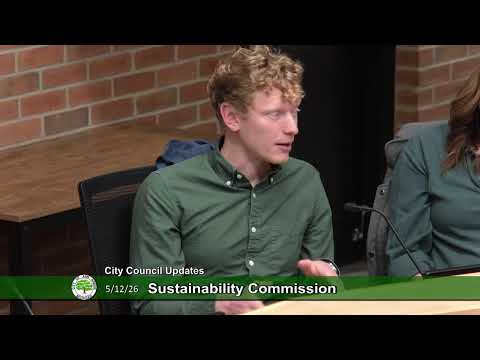
Ann Arbor Sustainability Commission rolls out four working groups to scale local climate, food and outreach efforts
Summary
The commission approved plans for four fiscal‑year working groups — neighborhood decarbonization, a community agriculture resilience audit, a storytelling campaign and offsets planning — and discussed meeting cadence, volunteer roles and staff support to move projects toward measurable deliverables.
The Ann Arbor Sustainability Commission on May 18 set out a year of focused working groups aimed at accelerating local climate work, strengthening the city’s food system and expanding public outreach.
Staff described four working groups for the 2026 fiscal cycle: residential neighborhood decarbonization, a community agriculture resilience audit (CARrot), a storytelling campaign to raise awareness of A2’s climate programs, and a public engagement process for offsets and renewable energy credits. Commissioners discussed scope, measurable goals and how volunteers and staff would organize to produce concrete deliverables.
The neighborhood decarbonization proposal seeks to shift programs now delivered house‑by‑house — such as Solarize and home energy rebates — to a neighborhood scale. A staff presenter asked, “Can we do a block at a time? Can we do a HOA at a time? Can we do a whole neighborhood at a time?” Commissioners probed how scale would affect outreach, costs and metrics; staff said the city already tracks energy savings and estimates carbon reductions for individual rebate projects and would apply similar metrics at larger scale.
The community agriculture resilience audit would use an established CARrot assessment toolkit to map how food moves through the area and identify gaps the city could help fill, staff said. The audit would be coordinated with local partners, including the conservation district, and is intended to inform prioritization within the city’s A20 plan.
A separate storytelling working group will work with OSI communications staff to broaden awareness of existing programs — from monthly “climate heroes” recognitions to IMA20 short videos and weekly updates — and to help recruit participants for city initiatives. Communications coordinator Grace (staff) outlined existing formats and asked commissioners to help amplify content through their networks.
On offsets, staff said the commission should help shape community engagement around what types of offsets would be considered acceptable as the city moves toward its 2030 goals, while reiterating a priority to minimize reliance on offsets by reducing emissions where possible.
Commissioners debated meeting formats for the working groups. Some urged compressed multi‑meeting sprints to maintain momentum; others favored planning kickoffs and then flexible, project‑based cadences so volunteers with limited time could still contribute. Staff said each working group would work with its assigned staff lead to define an appropriate schedule and deliverables.
The meeting also included routine business: the agenda and previous meeting minutes were moved, seconded and approved by voice vote at the start of the session, and the commission adjourned after the agenda was completed.
Next steps: staff will bring more detailed working group charters and staff‑lead recommendations to the commission’s next meeting, and commissioners were asked to indicate which working groups they wish to join.