Get Full Government Meeting Transcripts, Videos, & Alerts Forever!
Get email alerts on the Treatment Court topic
No spam. Unsubscribe anytime.
Koochiching County proclaims May 2026 National Treatment Court Month after participant testimony
Summary
The Koochiching County Board of Commissioners unanimously adopted a proclamation declaring May 2026 National Treatment Court Month after hearing from a current participant about recovery supports and a proposed nonprofit to fund community recovery resources.
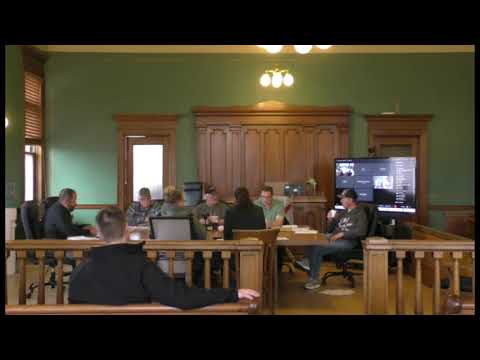
The Koochiching County Board of Commissioners voted unanimously May 12 to declare May 2026 National Treatment Court Month after a treatment-court coordinator and a current participant described the program’s impact and local funding gaps.
The proclamation, read during the board meeting, cites national research and All Rise guidance and states that treatment courts combine accountability with evidence-based treatment and save public dollars; the board approved the proclamation by voice vote.
The treatment-court presenter (identified in the meeting transcript as Alyssa) told commissioners the program follows a five-phase structure, holds weekly sessions and will mark the month with radio spots and a graduation. She said judicial-branch funding is limited in scope and cannot be used for many types of recovery supports — housing, gas cards and social activities — prompting organizers to pursue a community-led 501(c)(3) to accept donations and pursue grants. "We can't help with housing. I can't help with gas cards to get you to a new job," the presenter said, urging commissioners to attend a stakeholder meeting scheduled for 1:00 p.m. the following day at Friends for Friends Against Abuse.
Commissioners heard firsthand from participant Kim Bernell, who described entering treatment court on Dec. 12, 2024, advancing to phase five, and being eligible to graduate Aug. 3 if she meets remaining requirements. "As of today, I have 17 months and 15 days sober," Bernell said, crediting the treatment-court team and outpatient services for providing accountability and social supports that helped sustain recovery. She recounted losing housing and family ties during active addiction and said the program’s combination of court oversight and treatment made the difference for her.
The presenter noted the county currently receives opioid-related funding that is scheduled to end and is capped by state rules; commissioners discussed the difficulty of sustaining supports without new funding sources. The proclamation text read during the meeting cites All Rise (formerly National Treatment Court Association) and states treatment courts refer more than 150,000 people annually to treatment and recovery services and deliver evidence-based practices. The board’s adoption was recorded in the meeting as a unanimous voice vote.
Next steps identified at the meeting include the stakeholder meeting to explore forming a 501(c)(3) to provide recovery capital — defined in the presentation as the social and material resources that help people sustain long-term recovery — and an invitation for commissioners to attend the treatment-court session and graduation later in the week. The board’s action was procedural (a proclamation) and does not itself appropriate new county funds; presenters indicated they may request budget support in a future budget review meeting with Administrator Co.