Get Full Government Meeting Transcripts, Videos, & Alerts Forever!
Get email alerts on the National Security Iran topic
No spam. Unsubscribe anytime.
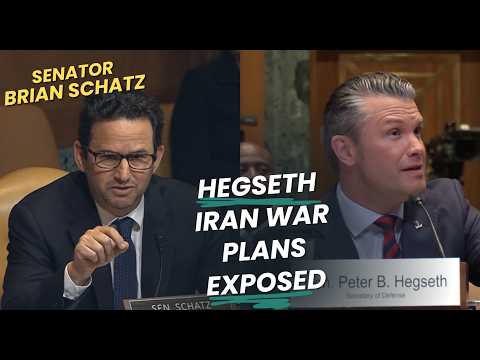
Senator presses secretary on whether U.S. anticipated Iran’s retaliatory strikes and moved defenses
Summary
During a Senate hearing exchange, a senator asked a cabinet secretary whether U.S. officials foresaw Iran’s retaliatory strikes and the post-war movement of missile-defense systems; the secretary said planners had "accounted for" the risks and empowered commanders to respond.
A senator pressed a cabinet secretary on whether U.S. officials anticipated Iran’s retaliatory strikes and the subsequent movement of missile-defense assets, asking for reassurance for constituents that the damage and evacuations were foreseen.
The questioner cited a 2019 DIA publication that, the senator said, found Iran "had swarms of small boats, large inventory of naval mines, [and] an arsenal of anti-ship missiles that can severely disrupt maritime traffic in the Strait of Hormuz," and noted a 2025 Brookings commentary after Operation Midnight Hammer warning that Iran should not be considered defeated. The senator also said Iran’s strikes had ‘‘penetrated nearly every part of Israel’’ and could endanger U.S. forces in the Gulf.
At the center of the exchange were operational details and planning: the senator referenced a prior question to General Kane, asserted that "parts of THAAD and Patriot systems in South Korea were moved to the Middle East" after the war began, and said Iran had struck "more than 200 structures and equipment at 16 U.S. sites." The senator asked whether those developments were foreseen and part of an overall plan or whether there had been surprises.
The secretary responded directly: "I can reassure you that it was all accounted for." He said the Joint Staff and civilian leadership had reviewed every aspect ‘‘in pursuit of a very clear goal,’’ and framed the actions as undertaken to ensure Iran never acquired a nuclear weapon. He added that officials had "factored all the risk and ranges of options, put in maximum defensive capability for our troops ... empowering the CENTCOM commander with everything he needed to ensure this mission could be as successful as possible."
The senator continued to press for more detail, questioning why defenses and evacuations appeared to have been conducted as a scramble rather than as pre-planned measures and noting past incidents in which U.S. personnel were taken by Iranian fast boats. The secretary reiterated that planners had considered the risks and that commanders were given the authorities and resources to respond.
The hearing excerpt ends with the secretary restating confidence that, alongside CENTCOM commanders, officials had taken the available actions to prepare for the conflict. No formal vote or committee finding was recorded in the provided transcript excerpt.