Get Full Government Meeting Transcripts, Videos, & Alerts Forever!
Get email alerts on the Wastewater Project topic
No spam. Unsubscribe anytime.
Omaha officials defend $565 million Pilion Creek treatment expansion as contractors and watchdogs fault bidding and costs
Summary
City staff argued the Pilion Creek secondary treatment expansion is required to meet state ammonia and nutrient permits and replace aging infrastructure; opponents and local contractors said the CMAR amendment removes competitive bidding protections and increased costs substantially. Council requested more documentation before a vote.
City of Omaha public works officials on March 3 presented the Pilion Creek Water Resource Recovery Facility secondary expansion — a multi-year capital project with a $565 million estimated cost — and defended a proposed amendment to the construction manager-at-risk (CMAR) agreement with McCarthy Building Companies.
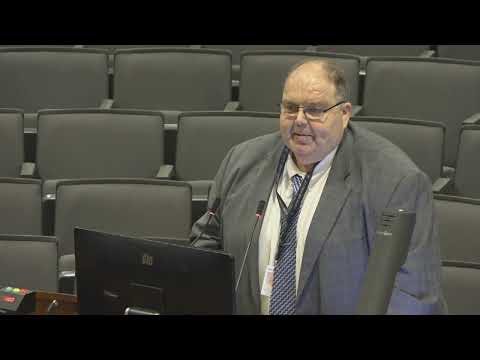
Jim Tyler, a city public works official, told the council the project is intended to meet current state ammonia limits and anticipated nutrient requirements and to replace infrastructure installed in 1977. Tyler said the overall capital improvement program for the project is about $565 million, that the construction timeline spans roughly six years, and that the work includes extensive foundations (he cited roughly 35 miles of piling) and new process tanks. He also described a separate procurement for proprietary activated granular sludge equipment totaling about $88 million, which the city plans to buy directly.
The hearing drew proponents and opponents. McCarthy’s business unit leader, Jiren Murphy, described McCarthy’s regional water experience and local workforce programs and said the company would partner on delivery. Labor representatives including Dan Ruskcowski of the Mid America Carpenters expressed support for the CMAR approach and said the guaranteed maximum price (GMP) model shifts certain cost risks to the contractor.
Opponents — including Jim Vocal of the Platte Institute and Chris Hawkins of Hawkins Construction Company — urged council to reject the amendment because they said it eliminated competitive-bidding safeguards that were part of the original pre‑construction agreement. Vocal said the construction cost now before council (a GMP figure discussed in the hearing) would be roughly $411 million for construction and that figure was “approximately $130 million over the initial cost estimates,” a gap he said merited rebidding. Hawkins likewise said the project appeared “tens of millions” more expensive than it should be and criticized fee calculations and the contract changes.
Council members pressed public works and McCarthy on procurement detail for subcontracted packages and on the city’s attempts to engage small and emerging businesses (SEBs). Tyler said the city used third-party estimators, engineers, and a negotiated open-book process to validate costs and manage risk; he argued that the CMAR/GMP approach is intended to limit change-order exposure and provide cost certainty on a complex project of this scale. City legal counsel cited Neb. Rev. Stat. §13‑2912, saying CMAR contracts may be conditioned on later refinements in scope and price and can be amended accordingly.
Council and public speakers also raised quantitative questions: public commenters and contractors pointed to a small share of SEB-specific work (testimony cited $1.8 million identified for SEB contracts compared with the large GMP figure), concerns about whether McCarthy submitted self-perform bids in advance as required by the original Article 10 of the pre-construction contract (a point contested in the hearing), and a fee-on-fee arithmetic discrepancy opponents said added roughly $2.5 million in extra fee cost.
The council did not finalize a vote on the CMAR amendment at the hearing; instead members asked public works, the city attorney’s office, and the contractor to provide requested documentation (third-party estimates, bid records, and detailed package lists) before any final vote. Tyler and McCarthy said they would return with the additional materials. The procurement for the $88 million equipment package (Aqua Aerobic Systems) was described as a proprietary purchase the city intends to proceed with regardless of the contract amendment outcome.
The council’s next procedural step, as stated during the hearing, was a vote on the ordinance amending the pre-construction contract scheduled for a future meeting after the requested follow-up materials are provided.