Get Full Government Meeting Transcripts, Videos, & Alerts Forever!
Get email alerts on the Drainage Infrastructure topic
No spam. Unsubscribe anytime.
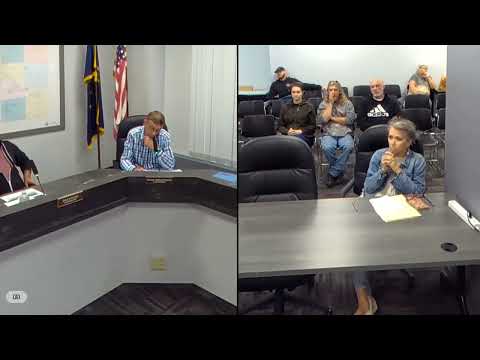
Landowners and board spar over who will replace aging Lumbbo tile
Summary
Board members and landowners debated options to repair or replace the century‑old Lumbbo tile, with estimates ranging into the high hundreds of thousands and discussion of private funding, assessments, and forming a landowner committee to decide next steps.
Board members opened a broad discussion of the Lumbbo tile, a drainage tile the meeting record describes as very old and in need of repair or replacement. Board staff reported account balances and collection numbers: "Currently . . . there's $68,281.99 in there," and the board was told the area will collect about $20,187.95 more and that the account "shuts off" at $80,751 unless funds are used.
A board member read acreage and rate figures for the watershed: "1,272 acres . . . currently collecting at $15 an acre," and committee materials indicated 22 home sites collecting $50 each. Landowners and farmers at the meeting urged action and described deteriorating tile conditions; farmer Max Millsworth said parts of the tile are "probably 130 years old" and crews were repairing sections now.
Discussion focused on whether landowners should form their own committee and privately fund replacement—as was done on a prior 'Elliott' project—or whether assessments collected through the board could fund repairs while preserving regulated‑ditch oversight. Several board members warned that larger tile sections would require surveys, deeper alignments and engineering and could increase costs: "If it's going to be bigger than what's existing, you're going to have to move it over," one member said, noting survey and depth work would be required.
Estimates provided in the discussion suggested the project could approach "close to a million dollars" depending on the design and whether a single or twin tile is used. Participants repeatedly urged landowners to meet privately to organize and decide whether to proceed with a phased approach, hire engineers, and consider assessment schedules. A number of speakers emphasized the difficulty of obliging all landowners to pay and the possibility that, if many decline, the project would stall.
The board did not take a formal vote on construction or assessments at this meeting; members advised landowners to convene, consider private financing or staged assessments, and return with a committee or petition for formal action.