Get Full Government Meeting Transcripts, Videos, & Alerts Forever!
Get email alerts on the Surveillance Cameras topic
No spam. Unsubscribe anytime.
Residents urge Amarillo to pause Verata camera expansion; police chief says cameras are traffic-focused and retain video seven days
Summary
Dozens of residents urged the council to halt a proposed expansion of Verata/traffic camera systems over Fourth Amendment and privacy concerns; APD's chief said the cameras are traffic cameras (not ALPR/facial recognition), footage is retained seven days unless archived for a case, and officer access generates an audit trail.
Hundreds of residents who attended the May 12 council meeting urged officials to pause or cancel a proposed expansion of the city’s camera systems, saying a 10‑year storage agreement and cloud-based data collection pose unacceptable privacy and civil‑liberty risks.
Caroline Stout, the first public commenter on the item, told the council she “strongly oppose[d] the proposed expansion of the Verata camera system” and voiced Fourth Amendment concerns about long-term tracking and cloud storage. Other speakers—including Madison Bole, Joe West, and several youth—urged the council to cancel contracts with a suite of private vendors (naming Axis, Flock Safety, Granite Drone Technologies, DJI, Verata and others) and to institute stronger oversight, limits on retention and access, and independent audits.
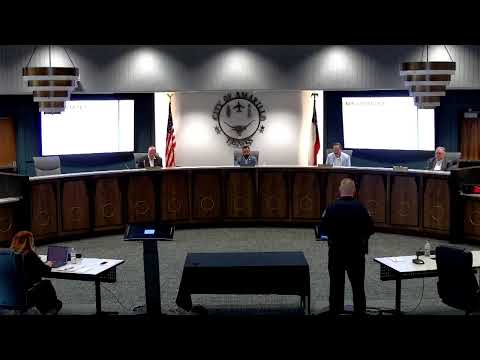
After the public comment surge the council pulled agenda item 4.7 from the consent agenda for staff explanation. APD Chief Hoverver said the city’s current Flock cameras are traffic cameras mounted at intersections and are not automatic license-plate readers or a facial-recognition system. He said footage ordinarily drops from the video-management system after seven days unless retained as evidence for a case; officers who access video must enter a reason and case number, producing an audit trail. “They’re traffic cameras… It’s simply nothing different than a regular camera that you see in front of us today,” the chief said.
Chief Hoverver and deputies also said current license‑plate reader capability in the system is used for investigations and recovering stolen vehicles and that the cameras are shared with Potter and Randall County partners but not with federal entities. Council members acknowledged the public’s privacy concerns and invited residents to tour the regional crime‑fighting center to see how data is stored and used.
What’s next: Council removed the item from the consent agenda for discussion; staff said they will provide detailed maps of camera placement, retention policies, and access rules to the public and coordinate tours and briefings for interested residents and councilmembers.