Get Full Government Meeting Transcripts, Videos, & Alerts Forever!
Get email alerts on the Bylaws Conflict Of Interest topic
No spam. Unsubscribe anytime.
Advisory committee moves to align bylaws with county rules, narrows conflict-of-interest language
Summary
San Mateo County’s Agricultural Advisory Committee reviewed and edited proposed bylaw changes May 11, agreeing to match county handbook language on term limits and to remove a previously included Form 700 filing requirement while asking counsel to supply written code citations on conflicts. Members asked staff to bring a revised draft for a vote next month.
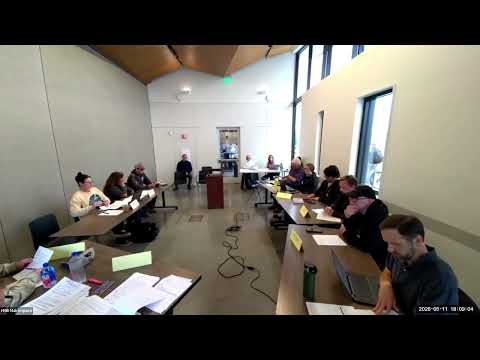
The Agricultural Advisory Committee (AAC) reviewed proposed amendments to its procedural rules on May 11 and directed staff to incorporate edits and return a revised draft for a vote at the next meeting. Chair Natalie St. opened the discussion after the committee agreed to take up remaining sections of the bylaws.
Why it matters: Committee language on term limits and conflict disclosures governs who can serve and how members handle potential financial interests; members said they wanted the wording to match the county’s Boards & Commissions handbook and to avoid imposing requirements that do not apply to advisory bodies.
Staff told the committee the county’s suggested change to section 2.4 would make AAC wording consistent with the handbook so that partial terms would not count toward the total 12-year limit and members with expired terms could remain until reappointment or replacement by the Board of Supervisors. Several committee members voiced support for that alignment and asked staff to consolidate redundant language across related sections (4.1, 4.5 and 5.3).
A substantial portion of the discussion focused on conflict-of-interest references. Members questioned why Form 700 (the Statement of Economic Interests) had been referenced in past drafts; county counsel and staff advised that advisory bodies generally are not subject to the Political Reform Act’s Form 700 filing requirement. Counsel summarized the legal risk they were trying to avoid, explaining that Government Code section 1090 “has to do with…not being financially interested in a contract that a body is considering.” The committee agreed it was appropriate to remove an explicit Form 700 filing requirement from the draft and to retain a narrower obligation to “comply with all applicable laws governing conflicts of interest.”
The committee also debated operational language about quorum (clarifying that a quorum is a majority of “seated” voting members so vacancies do not artificially change quorum math) and agreed to strike redundant meeting-time text that had previously set windows such as “during the times of 6 p.m. to 8 p.m.”
On recusal and disclosure, staff and counsel advised using the Board of Supervisors’ standing rules as a guide. Counsel described common thresholds as examples (roughly $500 for income or gifts in the prior 12 months and $2,000 for real property, as general guidance used by the Political Reform Act) and recommended that members disclose potential interests and recuse themselves when appropriate. Daniel Fable summarized the committee’s preferred practice: “If you think there might be a conflict, you disclose it and then, if you think you’re still able to vote impartially, you say so; if other members are uncomfortable, then recuse.”
What’s next: Staff and counsel will integrate the edits discussed — striking the Form 700 requirement, adding a short example encouraging disclosure and recusal practices, clarifying quorum language, and removing redundant timing language — and circulate a revised draft with links to the cited codes for review. The committee plans to consider the revised document and vote at its next meeting.
Attribution: Quotations and paraphrases in this report are drawn from committee discussion May 11 and reflect statements by council members and county counsel during the meeting.