Get Full Government Meeting Transcripts, Videos, & Alerts Forever!
Get email alerts on the Land Use Development topic
No spam. Unsubscribe anytime.
Fort Myers Beach planning board recommends denial of London Bay’s Outrigger plan after marathon hearing
Summary
After more than five hours of testimony and public comment, the Fort Myers Beach Local Planning Agency voted to recommend denial of the London Bay Outrigger project’s comprehensive plan amendment and its CPD rezoning, citing inconsistency with the town’s adopted plan, questions about floor‑area calculations and neighborhood compatibility. The board gave mixed rulings on related shoreline requests.
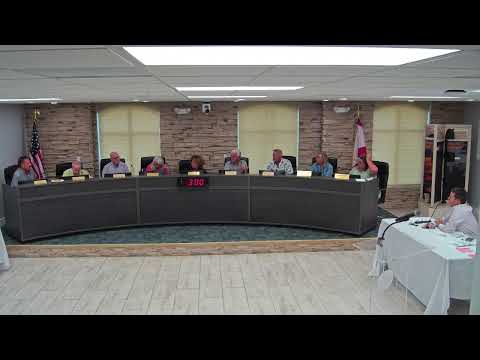
The Fort Myers Beach Local Planning Agency voted on May 12 to recommend denial of London Bay’s proposed comprehensive plan amendment and to deny the companion commercial planned development that would have allowed a mixed‑use “Outrigger” resort on the town’s south end.
The vote followed a marathon, often emotional hearing in which residents packed the council chambers to urge the LPA either to block or to approve the developer’s plan. Opponents argued the proposal was too tall, too dense and inconsistent with the town’s recently adopted comprehensive plan. Supporters — including several local restaurateurs and business owners who submitted more than 70 letters of written backing — said the project would bring restaurants, jobs and vitality to the south end.
“I am asking the LPA to consider not passing the amendment…Instead, I asked the town to put a moratorium on large‑scale development,” said David O’Brien of Gulfside 12 during public comment, summarizing a frequent concern among nearby residents about cumulative scale and the process used to approve variances and height changes.
Applicant counsel Richie Vanovich and London Bay CEO Mark Wilson spent hours walking the board through alternatives — including by‑right rebuild options and an administrative option under Florida’s Live Local Act — and through a string of revisions the team said it had made in response to prior LPA feedback. Vanovich described two by‑right scenarios, including a Live Local administrative pathway that would require 40 percent of units to be workforce housing, and warned the developer had fallback options if the LPA and council rejected the requested map and zoning changes.
Wilson said the team had reduced the tallest building’s midpoint to 158 feet measured from the base flood elevation and that engineers had excluded certain unconditioned areas from the floor‑area ratio (FAR) calculation to lower the apparent density. “We’re trying to be open about what we can do by right and what we’re asking for,” Wilson said.
But LPA members and several residents pressed on the calculations and the precedent the project might set. “The comprehensive plan is a covenant,” said Commissioner Anita (LPA member) during deliberations, urging strict adherence to the town’s adopted policies on FAR and height. Several members said they wanted clearer, three‑dimensional renderings and a firmer, verifiable FAR calculation before approving a text or map change.
After lengthy discussion and several proposed alternatives — including a narrow motion to cap FAR at 2.5 or to reduce maximum height — the LPA voted 5–2 to recommend denial of the comprehensive plan amendment and later denied the CPD rezoning 6–1. The board cited inconsistency with the adopted plan, unresolved questions about how FAR was being calculated, and neighborhood compatibility as primary reasons for the negative recommendations.
The hearing also considered a series of shoreline‑related requests tied to the project: a special exception to allow reconstruction of a beachfront accessory building in the environmentally critical (EC) zone (the location where the applicant proposes to re‑establish a new “tiki”/activity building), an expansion of consumption‑on‑premises (COP) service into a seaward portion of the property, and a side‑setback variance intended to match the property’s historic footprint.
On those shoreline items the LPA split its positions. The board recommended denial of the reconstruction of a new major accessory structure in the EC zone, citing policy concerns about placing new structures in that sensitive area. The LPA did approve a more limited expansion of consumption‑on‑premises area by a 6–1 vote, but later denied the requested 15‑foot reduction in the side‑yard setback that would have placed a rebuilt structure 10 feet from the neighboring property line.
Neighbourhood impact was a recurring theme in public testimony. “If the proposal by London Bay is approved as it is, it will set a precedent contributing to excessive financial costs, residents, and a burden on our quality of life,” said Beth Burwinkle, a south‑end resident. Gulfside 12 neighbours repeatedly asked the board to move or shrink the proposed beach‑side amenity so it would not sit close to their pools and backyards.
The applicant told the LPA it would continue to refine the proposal and take the board’s feedback to the town council; Vanovich noted that the developer still had administrative and by‑right alternatives under state law if the legislative changes were denied. The town council will receive the LPA’s recommendations when the applicant’s ordinances proceed to the council for final consideration.
The decision leaves the project’s biggest questions — maximum allowed FAR, the precise height envelope and the appropriate location of shoreline amenities — unresolved at the local level. The council’s hearings will be the next step in what is likely to be a protracted review process if the applicant pursues a council vote.
What happens next: The LPA’s denials are advisory. The applicant may revise the proposal and present it to the town council; the applicant also retains other by‑right and administrative options available under state law if it chooses not to pursue the legislative route. The town staff will continue analysis of FAR calculations and other code interpretations requested by the board.
Votes at a glance: The LPA voted to recommend denial of the comprehensive plan amendment (5–2) and denied the CPD rezoning (6–1). The board also denied the EC reconstruction request and the requested side‑setback variance, while approving a limited expansion of consumption‑on‑premises service seaward of the 1978 CCCL by a 6–1 margin.
(Reporting from the May 12 Fort Myers Beach Local Planning Agency meeting.)