Get Full Government Meeting Transcripts, Videos, & Alerts Forever!
Get email alerts on the Land Use Subdivision topic
No spam. Unsubscribe anytime.
Commission grants primary approval to Terra Vista Glenn Phase 3 amid resident opposition over density, drainage and traffic
Summary
The Vigo County Area Plan Commission granted primary approval to Terra Vista Glenn Phase 3, allowing a developer to move forward with a 60-lot layout (54 buildable, six drainage lots) after lengthy public comment raising concerns about smaller lot sizes, stormwater runoff and traffic congestion. Secondary approvals remain required.
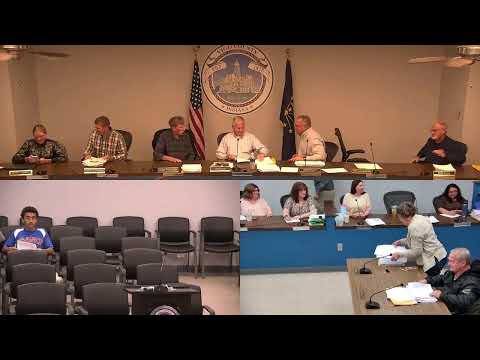
The Vigo County Area Plan Commission voted to grant primary approval to the Terra Vista Glenn Phase 3 subdivision after an extended public comment period during the commission’s May meeting. The primary plat covers roughly 17.46 acres and shows 60 lots in total, of which staff identified 54 as buildable and six set aside for stormwater/drainage.
The commission heard a presentation from petitioner representative Eddie Felling, who said his team worked with city officials and the redevelopment authority and described a TIF-backed financing approach to fund infrastructure for the project. “We’ve worked in lock step with the city…we’ve made a lot of steps to get to where we are today,” Felling said.
Residents from adjacent Terra Vista, Water Tree, Ferndale and other nearby neighborhoods raised repeated concerns during public comment. Several speakers said the proposed lot sizes and density are inconsistent with the character of phases one and two. “From everything I’ve read about this new phase of development it is very inconsistent with the rest of the neighborhood,” said resident Eric Decon.
Other frequent complaints centered on drainage and stormwater runoff. Neighbors described standing water on the field that will be developed and past drainage problems they say accompanied earlier phases. A longtime resident said his neighbor’s garage and lower-level areas have flooded in prior storms after nearby development changed historic flow paths.
Traffic and safety also drew scrutiny. Speakers cited difficult left turns onto Poppler (the primary connector) and camp traffic at a nearby church during peak drop-off and pick-up times. Several residents urged the commission and city to require traffic mitigation — including turn lanes or roundabouts — as part of later approvals.
Felling and staff emphasized the limits of primary-plat review and the protections in later phases of the process. Staff and the chair reiterated that secondary approval — which must precede any building permits — will require detailed drainage plans, road designs, city engineering sign-offs and other permits. “This is the first step. There will be a second step. We will all see this again,” the chair said.
On several procedural points, staff and the developer clarified subdivision details: the applicant described a state-authorized TIF loan instrument being used to finance infrastructure, with developer repayment obligations; staff noted that dedicated roads will be required to city standards and that stormwater must be contained and routed to city systems under current engineering rules.
After public comment and discussion, the commission approved the primary plat by voice vote with one recorded opposition. Commissioners and staff stressed that secondary approval will require engineering approvals and that construction cannot proceed without those subsequent clearances.
Next steps: the developer must secure secondary approvals that include detailed drainage and erosion control plans, road design approvals, and any required permits and bonds before lots become buildable or building permits can be issued.