Get Full Government Meeting Transcripts, Videos, & Alerts Forever!
Get email alerts on the Therapy Dog Program topic
No spam. Unsubscribe anytime.
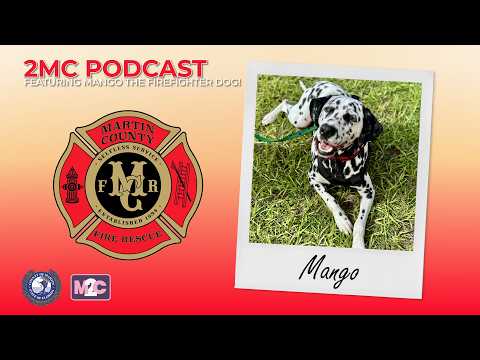
Martin County Fire Rescue designates Mango as therapy dog to support responders’ behavioral health
Summary
Martin County Fire Rescue has approved Mango as the department’s therapy dog, Chief Chris Camp said on an on-site segment of 2MC; the program aims to reduce post-incident stress, with planned station visits and training to support staff mental health.
Martin County Fire Rescue has designated Mango as the department’s therapy dog, Chief Chris Camp said during an on-location 2MC segment at the Fire Rescue Training Center. Camp, who identified himself as EMS chief and lead for behavioral-health programs, said the dog will support Critical Incident Stress Management and routine station visits.
Camp said the department recently gave Mango official approval to serve in the role. "We have approval that he is actually our therapy dog for sure now," he said on camera. The designation follows several months of training overseen by Camp after Mango came to the area through a local rescue pathway.
Camp described therapy dogs as a tool to reduce physiological and emotional stress after difficult calls. "Having them in the room lowers the temperature," he said, adding that dogs tend to decrease cortisol and make people more willing to open up during debriefings. In the interview he characterized the effect as "60–70% more willingness to share," framing that as an observed benefit in post-incident and peer-support settings.
Mango’s backstory, as recounted by Camp, began when the dog appeared in Jupiter and was taken in by a rescue group called Furry Friends. Camp said Mango then received formal training, including time in a prison-based program, before Camp continued eight months of handler training.
Camp outlined how the program will operate: Mango will be part of a rotation of station visits so crews across the county can see the dog, and Camp said handlers will do short daily reinforcement training (about 10–15 minutes) and bring Mango to stations later in the day for informal check-ins. "Within five minutes, everybody’s smiling," Camp said of recent station visits.
The segment included informal details about Mango’s temperament and rewards-based training; Camp said hot dogs are Mango’s favorite treat and that he responds quickly to commands worked into short practice sessions.
The transcript did not specify when the departmental approval occurred, whether the designation required a formal administrative vote, or whether outside agencies were involved. Funding sources, formal program policies, oversight mechanisms, and measures for evaluating the program’s outcomes were not discussed in the recorded segment.
The program is intended to supplement Martin County’s existing behavioral-health efforts for emergency responders; Camp characterized it as one way to mitigate PTSD and post-incident stress among fire and EMS personnel. The segment ended with hosts inviting viewers to follow future updates and demonstrations of Mango’s work.