Get Full Government Meeting Transcripts, Videos, & Alerts Forever!
Get email alerts on the Expungement Services topic
No spam. Unsubscribe anytime.
Maryland Volunteer Lawyer Service proposes free expungement clinics for Baltimore County residents
Summary
Maryland Volunteer Lawyer Service proposed a county program to provide free criminal-record expungement clinics, aiming to hire a staff attorney and paralegal and serve about 350 residents in year one; commissioners asked about referrals, prioritization for people experiencing homelessness and timing for awards.
Maryland Volunteer Lawyer Service (MVLS) proposed a county-funded expansion to provide free criminal-record expungement services to Baltimore County residents, the nonprofit’s staff attorney told the Baltimore County Reinvestment and Repair Commission at a working session. "I am Chris Sweeney. I'm the staff attorney at Maryland Volunteer Lawyer Service," he said, describing a workforce-development model MVLS operates in Baltimore City that the group would replicate in the county.
MVLS said the program would hire a dedicated staff attorney and paralegal in the first year, partner with shelters, job-training programs and community centers for clinic-based legal screenings, and aim to serve about 350 clients in year one. MVLS described the legal steps to expunge records — including statutory waiting periods and court filings — and cited research estimating about 150,000 people in Maryland with convictions and roughly 86,000 in Baltimore County potentially eligible for expungement.
The presentation emphasized the program’s practical benefits for employment, housing and government benefits. Sweeney said filing-to-order timelines typically run "3 to 6 months" after paperwork is filed, depending on the county, and that the majority of routine expungement filings are granted, though some cases require hearings.
Commissioners asked how MVLS would handle overflow and referrals, particularly for people experiencing homelessness with imminent housing needs. Sweeney said MVLS would plug into existing partner networks for signups, accept walk-ins when capacity allows, and can prioritize cases where timing is critical, working with partner staff to identify higher-vulnerability clients.
A participant performed back-of-the-envelope math and noted MVLS’s first-year budget would equate to about $645 per client if serving 350 people, a figure the presenters called strong value compared with private legal costs.
The commission did not take votes at the session; commissioners will review MVLS’s proposal along with other applications and make funding recommendations at a future full meeting on May 7. Staff and commissioners asked MVLS to follow up about referral pathways and potential expedited intake for housing cases.
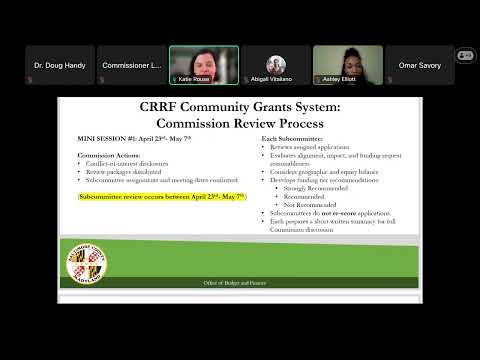
The presentation and discussion were part of a working session focused on preparing subcommittee review of more than 50 competitive grant applications. No formal action was taken on the MVLS proposal during the meeting.