Get Full Government Meeting Transcripts, Videos, & Alerts Forever!
Get email alerts on the Pensions Colas topic
No spam. Unsubscribe anytime.
Wyoming Retirement System reviews COLA history and eyes limited increases for fully funded plans
Summary
LSO and Wyoming Retirement System officials reviewed why cost-of-living adjustments stopped after 2008, the 2012 pension reforms, current funded ratios (public employee plan ~822.8% in recent reporting), and signaled possible modest COLAs for smaller plans that now exceed 100% funding.
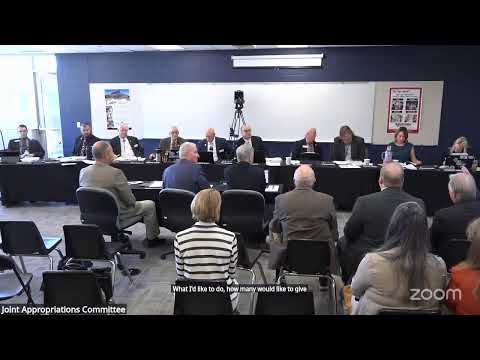
Lawmakers on May 1 heard a detailed briefing from LSO and the Wyoming Retirement System on the history of cost-of-living adjustments (COLAs), the pension reforms enacted in 2012 and the system's funding outlook.
Paulie Scott (LSO) summarized how COLAs were paid from plan assets from 1991 through 2008 and how the retirement board switched to an ad-hoc "break-even COLA" methodology in the 2000s. That approach systematically drew on plan surpluses and left the system vulnerable when markets fell in 2008. The 2012 pension reforms raised contribution rates, created a reduced benefit tier for new hires and removed the retirement board's authority to award ad-hoc COLAs unless statutory funding conditions were met.
Scott told the committee that, as of the most recent rolled-up numbers through 2025, the large public employee plan remains below the statutory 100% funded threshold (LSO and the retirement system estimate roughly 82.8% actuarial funded ratio for 2025 with projected full funding near the mid-2040s under current assumptions). "Since our last COLA was awarded in 2009, the accumulated WCLI (cost of living index) equated to about 67.5% from 2009 through 2025," Scott said.
System staff and board representatives said two plans (the judicial plan and Fire B) have reached or exceeded 100% on actuarial measures and that a third small plan (volunteer firefighters) is close; the board signaled it will model whether modest COLAs for those plans could be sustained while keeping required margins.
For scale, retirement-system staff presented a sample cost: a 1% across-the-board COLA would require roughly $8 million in the first-year cash outlay and an estimated present value (pre-funding) of about $83 million to sustain that increase as a continuing liability. "If you were to award a 1% increase in the retirement benefits across the system, it costs the system ... about $8 million" in year one, committee materials summarized.
David Swendell, WRS executive director, and Jeremy Smith, board chairman, highlighted strong recent investment performance (multi-year returns that rank highly among peers) and said the system's in-house investment staff generated sizeable excess returns that materially helped funded positions. They also warned of recruitment and retention challenges: the investment group needs authority and pay flexibility to remain competitive for senior analysts and investment officers.
Board leadership said the trustees will model options and return recommendations to the committee before any legislative action; the board also asked for legislative tools (actuarially determined contribution authority for more plans, flexible COLA design options and statutory authority to manage investment-staff compensation) to sustain future COLA policy without undermining long-term funding.
The committee did not act on COLAs; members asked LSO and the retirement system for additional modeling showing (a) the cost and funding impact of limited COLAs targeted by retiree cohorts or plans, and (b) how one-time deposits or staged pre-funding would affect time-to-full-funding for the large public employee plan.