Get Full Government Meeting Transcripts, Videos, & Alerts Forever!
Get email alerts on the Financial Literacy topic
No spam. Unsubscribe anytime.
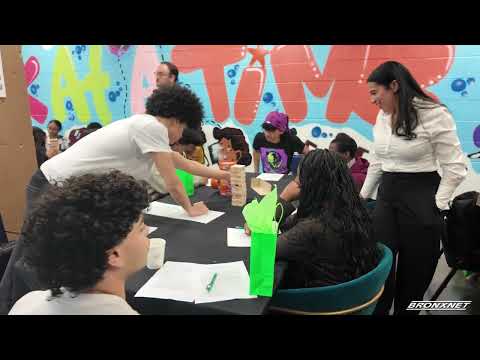
College Bridge Cafe and Spring Bank use Jenga to teach Bronx seniors about credit and loans
Summary
A BronxNet report described a College Bridge Cafe workshop, with partners Storyland and Spring Bank, that used a PowerPoint, Q&A and a Jenga simulation to help soon-to-be college students understand credit scores, loans and basic budgeting.
Nicole Rosado, a reporter for BronxNet, reported that College Bridge Cafe partnered with Storyland and Spring Bank to host a financial-literacy workshop for high school students preparing for college.
The workshop began with a PowerPoint presentation covering debit cards, credit cards, loans and credit scores, Rosado said. Organizers followed the presentation with a question-and-answer session and concluded with an interactive Jenga exercise designed to show how everyday choices can raise, lower or maintain a credit score.
Program organizers set a baseline score of 620 in the Jenga simulation to help students understand what lenders commonly consider when qualifying borrowers, the report said. During the exercise, students worked through scenarios — for example, choosing to pay with cash versus credit, the timing of payments and credit utilization — that produced changes in simulated scores; some students’ simulated scores dropped to about 585, prompting discussions of remedies such as credit-builder loans.
Rosado reported that the organizers’ goal was practical: to give soon-to-be college students tools to manage credit, plan for loans and make informed decisions about borrowing and saving. The report emphasized that College Bridge Cafe and Spring Bank hope to supplement school-based financial education by providing community resources and follow-up support.
The workshop’s combination of instruction, questions and a hands-on simulation was presented as a way to make abstract credit concepts more concrete for youth who will soon face financial decisions tied to college and early employment.
Reporting from BronxNet: Nicole Rosado.