Get Full Government Meeting Transcripts, Videos, & Alerts Forever!
Get email alerts on the Visitor Passes topic
No spam. Unsubscribe anytime.
Residents and council press for fixes to license-plate visitor-pass system; item stays in committee
Summary
Residents and several councilors pressed the Transportation Department to fix usability and equity problems with the license-plate-only visitor-pass system (visitor registration, contractor fees, and senior access); the council left the matter in committee for further study and potential hybrid solutions.
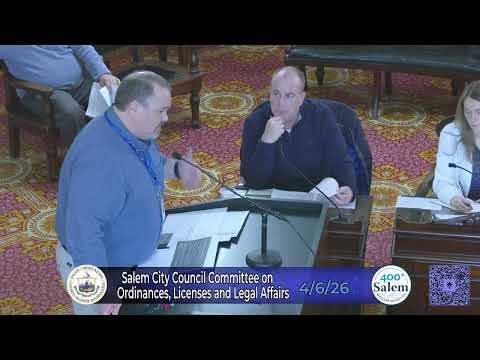
The Salem City Council committee spent the second half of its April 6 session focused on implementation problems with the city’s license-plate-based visitor-pass system and potential remedies, after a late-filed order from Coun. Presnoski (item 148).
Presnoski and several residents said the change from a placard/physical-pass model to one based on license-plate registration has created serious usability problems. Residents and neighborhood leaders — including Peg Harrington and Brendan Walsh — described difficulties for older adults, people without reliable internet, and homeowners who routinely host short-term visitors or contractors. One resident said a contractor quote for a multi-day job would cost an estimated $9,600 if charged daily at the current posted rate; that specific example prompted staff to discuss contractor and visiting-caregiver exceptions.
Transportation Director David Kacharski defended the LPR-based approach as a tool that made enforcement more efficient and improved compliance, but he acknowledged implementation pain points. He said the new system increased administrative and technology costs slightly compared with paper placards and that staff are exploring mitigations: rescinding tickets issued in clear error, making caregiver plates an override in the system (no fee), targeted outreach and bilingual flyers, optional opt-ins for auto-renew, and possible saved-license-plate lists so residents do not need to re-enter plates for frequent visitors.
Public commenters recommended a hybrid approach (limited, targeted placards or barcoded placards), contractor registration options (annual plate registration for frequent service providers), and expanded customer-service help for seniors and residents without web access. Several speakers urged a focused task force or pilot to find solutions tailored to different neighborhoods.
Outcome: the committee voted to keep the visitor-pass implementation matter in committee for continued work; Coun. Hapworth moved to leave the item in committee and the motion passed by a show of hands (four hands plus the chair). Staff committed to follow up with the mayor’s office and to investigate technical alternatives (RFID/barcode placards, saved-plate lists) and to provide more precise cost and revenue breakdowns.