Get Full Government Meeting Transcripts, Videos, & Alerts Forever!
Get email alerts on the Open Meetings topic
No spam. Unsubscribe anytime.
Merced staff outline SB77 changes: remote participation, translation and disruption rules take effect July 1
Summary
City attorneys and staff briefed the council on SB77 changes to California’s Brown Act, which require eligible city councils to provide two‑way remote participation, publish translated agendas where thresholds are met, and adopt disruption‑of‑service policies. Staff will return with draft procedures and technology options before the July 1 compliance date.
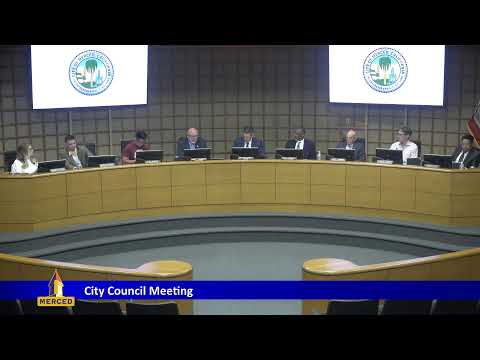
City legal staff and IT staff briefed the Merced City Council on SB77, a statewide update to the Ralph M. Brown Act, and what it will require the council to implement by July 1.
The chief deputy city attorney summarized the main changes: eligible legislative bodies (cities with population 30,000+) must provide two‑way telephonic or audiovisual participation so remote attendees can speak during public comment; the council must provide the same comment time for remote speakers as in‑person speakers; agendas must be translated into any language spoken by more than 20% of the population that speaks English “less than very well” (Merced currently meets that threshold for Spanish); and the law explicitly authorizes removing disruptive virtual attendees after a warning. The council must adopt a disruption‑of‑service policy documenting good‑faith efforts to restore remote access before reconvening and cannot approve that policy on consent.
Staff explained a near‑term operational approach: for the required one‑year period the city will implement a two‑way telephonic service (with a virtual request‑to‑speak queue) while the IT department develops longer‑term audiovisual solutions and a public meeting web page with translation tools and an email/agenda‑delivery system. City staff plan to return with draft policies and procurement options (including cost estimates) at an April 20 follow‑up meeting.
Council members asked how the city will balance in‑person and remote speaker queues, how public comment limits work (the council retains authority to set time limits and total comment time), and whether the new rules apply to commissions (generally they apply only to the city council as an eligible body). Staff said they will propose detailed operational rules and a public notice plan.