Get Full Government Meeting Transcripts, Videos, & Alerts Forever!
Get email alerts on the Budget Psvs topic
No spam. Unsubscribe anytime.
City staff previews PSVS budget and $7.5 million in candidate capital projects; council to decide priorities in June
Summary
City staff presented an early preview of the Public Safety & Vital Services (PSVS) fund for FY 2026–27, outlining modest revenue growth, recent one‑time funds and an estimated $7.5 million available for capital projects. Staff recommended using one‑time monies for radios, a police HQ generator, park projects and deferred maintenance; final council decisions and budget adoption are scheduled for June.
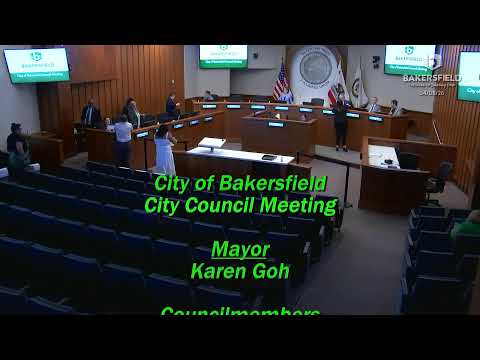
City Manager Christian Clay gave the Bakersfield City Council an early look at next year’s Public Safety & Vital Services (PSVS) fund Tuesday, saying staff expects modest revenue growth but still faces personnel and operating pressures.
“This is just an early preview of that information,” Clay told the council, emphasizing there was no vote tonight. He said the city projects a little more than 2% revenue growth, noted past filing errors that reduced receipts in prior years, and described roughly $17 million in one‑time funds available overall. From that pool, Clay said staff estimates about $7.5 million could be allocated to PSVS capital projects in the coming year.
Why it matters: staff urged the council to use one‑time funds for capital needs rather than add new ongoing commitments. Clay framed the approach as a way to preserve flexibility while addressing deferred maintenance and safety priorities.
Staff highlighted a set of candidate projects it recommends council consider: continued radio replacement and tower remediation and a new generator at police headquarters for continuity of operations; park projects including a phased MLK Park renovation tied to a $1.9 million grant (staff recommended a $3 million local match to secure roughly $11.9 million in grant funding for the first phase); turnout‑gear replacements to meet new state standards for the fire department; HVAC work at fire stations; street‑lighting expansion; environmental/design work on the Beach Park Bridge; traffic‑calming measures around schools; security cameras and access improvements for parks; and tennis court repairs at Seaman Park.
On MLK Park, Clay said the city has a $1.9 million grant and about $4 million in match funds available but needs roughly $3 million more to move forward with phase one. “I believe it’s a high priority to maximize those grant resources we’ve already received and go to construction on this first half of that park project,” Clay said.
Council members pressed staff on specifics. Council Member Coleman asked whether the PSVS personnel reductions staff described would also affect general‑fund positions; Clay replied that the administration targeted personnel savings across funds and that the PSVS personnel share was now lower after cuts. Council Member Arius asked how much of the slide figures represented one‑time versus ongoing dollars; Clay explained that about $18 million in one‑time monies and leftover capital savings were available to spend this year, while the revenue stream itself was closer to $100 million annually.
Next steps: Clay said the PSVS oversight committee will review eligibility under the charter’s 13 funding categories, the city will hold public town halls and two May budget workshops, and final council deliberations and adoption will occur in June. “The committee’s primary role is to determine if [items] are eligible or consistent with the funding categories,” Clay said; council retains authority to pick which projects to fund.
The council voted to receive and file the presentation; staff and council members emphasized that prioritization and any formal allocations will come later in the budget process.