Get Full Government Meeting Transcripts, Videos, & Alerts Forever!
Get email alerts on the Non Ad Valorem Assessments topic
No spam. Unsubscribe anytime.
Lynn Haven workshop advances charter ‘guardrails’ for non‑ad valorem assessments amid stormwater funding debate
Summary
Lynn Haven officials debated proposed charter language to require a seven‑item public disclosure before creating new non‑ad valorem assessments, focusing on transparency, caps on annual increases, and whether assessments should fund projects or ongoing department operations.
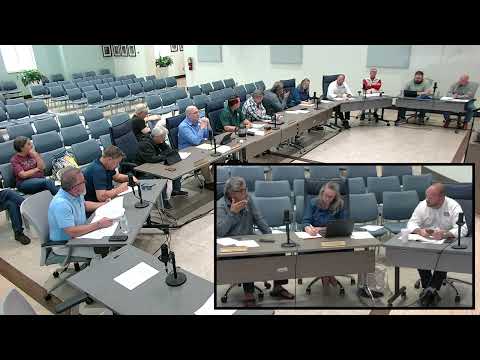
Chairman Langford convened a joint workshop of the Lynn Haven City Commission and the charter review committee to review proposed charter language aimed at creating standardized transparency and limits for non‑ad valorem assessments. The committee presented an ordinance and charter verbiage it said would require any proposed assessment to disclose seven core items — including project cost, start and end dates, an explicit methodology, the intended uses of funds, limits on annual increases and oversight/annual reporting — before voters or the commission approve a new assessment.
The requirement emerged from years of discussion around Lynn Haven’s stormwater assessment, which the committee says now generates about $2.7 million annually under a tiered structure. A committee member told commissioners that roughly $2 million of that funds stormwater operations, about $600,000 covers personnel, and only about $100,000 per year remains available for capital improvements. The committee cited a current capital need — described during the meeting as about $30,625,000 — and said the city remains heavily dependent on grants to pursue larger infrastructure projects.
The committee framed the seven‑item checklist as guardrails that would give residents consistent, comparable information about any future assessment: the problem being addressed, the total project cost, a defined start and end date (or an explicit statement if ongoing), the assessment methodology, the amount each property would pay, limitations on annual increases, and compliance/oversight procedures and reporting. ‘‘If you can check off all seven of those, the citizen should be fully informed,’’ a committee member said.
Commissioners split on how prescriptive those requirements should be. Commissioner Ward argued the charter should remain narrowly focused on government structure and not become an operational policy manual; he warned that hard limits in the charter could handcuff future administrations’ ability to respond to emergencies. ‘‘The charter is meant to define structure, authority and roles. It’s not intended to function as a policy document,’’ Ward said. Other commissioners said a charter requirement would be a stronger, longer‑lasting guarantee for residents than an ordinance that a future commission could undo.
A recurring point of contention was whether assessments should fund discrete capital projects with defined terms or ongoing department operations (personnel and maintenance). Several commissioners and committee members argued the seven items are easier to satisfy for project‑based assessments and urged that non‑ad valorem assessments be limited to funding projects rather than department operations; others noted that stormwater is functionally ongoing in a coastal community and that funding the department has yielded needed maintenance, culvert replacements and equipment purchases since 2021.
The committee proposed mirroring the state’s fire assessment approach to limit annual increases (the draft uses the same statutory methodology), but commissioners discussed an emergency carve‑out that would permit larger increases if approved separately by voters. Commissioners also discussed an alternative trigger: requiring a referendum only when planned assessments exceed a specified percentage of the city’s annual budget.
The draft language would also require clearer public notice and an annual assessment report outlining how funds were used and how they related to identified projects. Committee members said those reporting steps are not required at the same level today and argued the changes would restore transparency the committee views as missing during the stormwater implementation.
Next steps: the committee will finalize ordinance and ballot language for commissioners to consider; commissioners can decide whether to adopt the transparency guardrails in the charter or as an ordinance and which items, if any, to place on an upcoming ballot. No binding vote on the proposed charter language occurred during the workshop. The commission and committee indicated interest in refining the language — including possible removal of vacant parcels from assessment tiers — before any formal adoption or ballot referral.