Get Full Government Meeting Transcripts, Videos, & Alerts Forever!
Get email alerts on the Food Insecurity topic
No spam. Unsubscribe anytime.
Second Harvest tells Industrial Development Board it owns 23.5-acre Donaldson Pike site and plans campus to double storage, add Neighbor Care Center
Summary
Second Harvest Food Bank of Middle Tennessee told an Industrial Development Board ad hoc committee on April 8 that it has acquired 23.5 acres at 1301 Donaldson Pike and plans a campus that would double its warehouse storage, add a choice pantry, culinary training and wrap‑around services to address growing regional food insecurity.
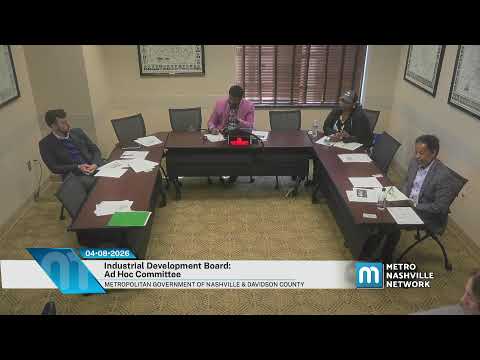
Second Harvest Food Bank of Middle Tennessee told members of the Industrial Development Board’s ad hoc committee on April 8 that it has acquired 23.5 acres at 1301 Donaldson Pike and is developing a campus intended to double the organization’s food-storage capacity while adding community-facing services.
Heather Bervo, chief financial officer, said Second Harvest — the largest Feeding America member in Tennessee — covers 46 counties and distributed about 50 million meals last year through roughly 600 partners. “We already own the property. It was purchased with no debt,” Bervo said, describing the site as south of the airport and between Citation Drive and Old Diesel Road.
The project team described multiple components on the proposed campus: a warehouse with roughly double the current facility’s pure food-storage footprint (the organization’s current site in Metro Center is “a little under 98,000 square feet”); a Neighbor Care Center with a grocery-style choice pantry; a culinary arts center for training and food manufacturing; meeting and classroom spaces able to seat about 300 (up to 500 in denser seating); and a community garden of more than one acre.
Troy Edwards, chief operating officer, said the new warehouse is being designed to allow a later conversion to narrow-aisle racking that could increase storage by an additional roughly 30 percent. Bervo told the committee the parcel has space for truck circulation and that Second Harvest is coordinating with the airport authority about a traffic signal and with WeGo about placing a bus stop on Donaldson Pike to improve access.
Committee members pressed presenters on demand trends and drivers of need. Bervo said the bank’s service area includes over 450,000 food-insecure people and that visits have risen since COVID; she described multiple causes including population growth, natural disasters, health-care costs and limits of SNAP benefits. “SNAP alone is not enough,” she said, adding that Second Harvest also helps enroll eligible people in SNAP.
Presenters said the campus will support expanded programming that is difficult at the current, landlocked Metro Center site: workforce development cohorts, a culinary training program that could support job pathways, space for nonprofit partners to deliver wrap‑around services, and volunteer and educational engagement. They emphasized partner use would be governed by memoranda of understanding and that Second Harvest does not intend to charge rent for nonprofit partners using the Neighbor Care Center.
The chair and committee members called the project a meaningful, potentially impactful investment in critical infrastructure for the region. No formal votes or approvals were recorded at the ad hoc meeting because the committee lacked a quorum; the chair said the item will return for further consideration at a future meeting and adjourned the session at 10:02 a.m.
The committee asked staff to keep the board informed and to return with the project for additional consideration; no funding or incentive commitments were made at the April 8 informational session.