Get Full Government Meeting Transcripts, Videos, & Alerts Forever!
Get email alerts on the School Closure topic
No spam. Unsubscribe anytime.
Staff and parents urge board to keep Joyce Clark Middle School open as district weighs K–8 reconfiguration
Summary
Staff, parents and union leaders told the Sierra Vista Unified School District governing board they oppose Superintendent proposals to convert some elementary schools to K–8 and close Joyce Clark Middle School, citing student transition, special-education and staffing concerns; speakers asked the board to delay a decision until a new survey is completed and alternatives are analyzed.
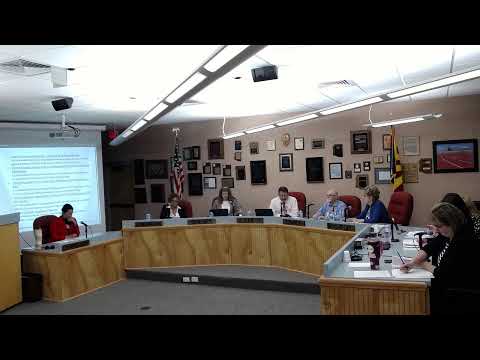
The Sierra Vista Unified School District governing board heard a steady stream of public comment opposing a proposed closure of Joyce Clark Middle School and a shift to K–8 configurations at elementary campuses.
Multiple staff and parents told trustees the plan—presented by district administration as part of a larger effort to close under-enrolled sites and reduce a multi‑million‑dollar spending gap—would harm students’ transitions and specialized services. Racist Davenport, a science teacher at Joyce Clark Middle School, said the proposal was premature and urged the board to gather more survey data before making a decision: "How fair is that when the survey has not been created yet? Do we truly know what the community and families will like without that information?" Davenport said. Melani Wolfe, a paraprofessional who helped organize a petition, said the staff had collected more than 300 signatures opposing the closure.
Union and longtime staff leaders emphasized operational and equity risks. Yolanda Everett, president of the district’s employees association, said staff have worked to develop an equitable process for closures and asked the board for more research and transparency before approving structural changes. Paraprofessionals and special‑education aides raised particular alarms about the effect on Cornerstone and other self‑contained programs, warning that larger K–8 campuses could increase stress for students who require one‑to‑one support.
Administrators told the board they would send a short survey to all staff and families with three primary options and an open‑response field, and that results would be returned to the board about one week after distribution. During the presentation staff agreed to add a 7–12 variant and a free‑text response option after trustees and speakers requested them. Administration also said some closures (and any associated savings) could require additional steps such as state or federal approvals to sell district property.
Why this matters: The district is confronting enrollment declines and a projected operating shortfall that administration says could require consolidations. Opponents told the board that closing the only middle school would disrupt electives, athletic logistics, and specialized services—issues they said were not yet adequately modeled. Several speakers urged trustees to consider alternatives, including piloting a K–8 at a single site or closing additional elementary schools instead.
What’s next: Administration said it will run the updated survey and circulate results to the governing board first; trustees also requested a special work session (and discussed the possibility of an executive session with counsel for related legal/financial questions). The board clarified that no final vote on JCMS was scheduled that night and that any formal decision would be taken at a later meeting.