Get Full Government Meeting Transcripts, Videos, & Alerts Forever!
Get email alerts on the Zoning Law And Board Practice topic
No spam. Unsubscribe anytime.
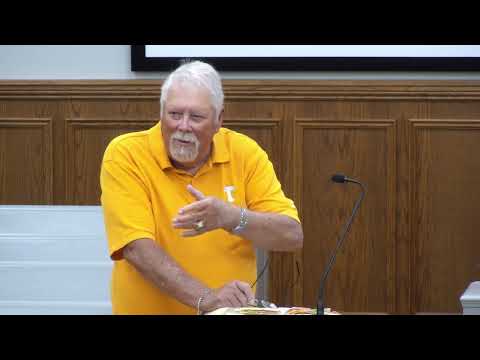
Sam Edwards tells Wilson County board to base zoning decisions on statutory powers, material evidence
Summary
At a Wilson County training session, Sam Edwards, Tennessee state chapter legal counsel, told planning and appeals board members that they must follow statutory authority, rely on material evidence and avoid adding conditions not written in local zoning ordinances to reduce court reversals and fee awards.
Sam Edwards, Tennessee state chapter legal counsel and a practicing planner-lawyer, told members of the Wilson County Board of Zoning Appeals during a continuing-education session that their authority is limited to powers granted in state law and that decisions must rest on material evidence and clear findings of fact.
"Dylan's rule is you won't find it in Tennessee code annotated. It is a judge-made rule," Edwards said, explaining that boards and planning commissions only have powers the Tennessee General Assembly grants. He cautioned members that if a power is not in the statute, the board cannot legitimately exercise it.
Edwards used court decisions to illustrate the point. He described a case in which a farmer who staged rock concerts lost in court because the activity was not part of agricultural production, and cited a Mount Juliet funeral-home dispute in which the board denied a crematory addition, the chancery court remanded the record, and the local government was ordered to pay attorney fees under the Equal Access to Justice Act.
"You must base whatever you do on material evidence with a finding of fact," Edwards said. "Opinion and speculation is not material evidence." He advised boards to require provable facts or qualified expert testimony (and supporting credentials or paperwork) when a case hinges on technical issues such as traffic, soils or environmental permitting.
On agriculture-related uses, Edwards warned that some Tennessee code sections (for agritourism or liability limits) do not define what counts as agriculture for zoning. "Pick the wrong one and you cited the wrong section of the code," he said, urging members to rely on the statutory definition and, if needed, agency guidance.
Edwards also explained nonconforming-use (grandfather) rules under TCA 137-208: a use lawful when established generally remains permitted after rezoning, and owners may rebuild or continue the use, but the grandfather status is lost only after 30 continuous months of abandonment with intent to cease. He stressed that boards should not add ad-hoc conditions not found in the zoning ordinance because chancery courts have struck down extra-ordinance conditions and remanded records.
Regarding variances, Edwards reviewed the narrow statutory test: a variance is appropriate only when a specific parcel shows exceptional narrowness, shallowness, shape, topographic conditions or similar extraordinary circumstances that existed when the zoning was adopted. He told members that financial hardship or man-made mistakes (for example, a contractor building on the wrong lot) are not lawful grounds for a variance.
Edwards noted a recent statutory change in which staff in some counties may make the initial special-exception determination and the board functions as an appellate body; that makes it important for staff to document material evidence and reasoning because the board will be reviewing that record rather than making an independent first-level decision.
He closed with procedural advice: avoid ex parte communications, ensure all supporting facts are in the public record, write concise findings of fact tying motions to material evidence, and be consistent. The session concluded with the chair adjourning to a scheduled 6 p.m. commitment.
The training did not include formal votes or ordinance actions; Edwards recommended members consult Title 13 of the Tennessee Code and the specific zoning ordinance language when crafting motions and findings.