Get Full Government Meeting Transcripts, Videos, & Alerts Forever!
Get email alerts on the Youth Programs topic
No spam. Unsubscribe anytime.
San Gabriel staff propose switching afterschool programs from free to $125/month and charging for middle-school sports
Summary
City staff proposed converting elementary afterschool programs from free to a $125-per-child monthly fee and charging $75 per sport for middle-school athletics, citing lost CDBG funding and rising staffing costs; staff projected about $190,000 in revenue but commissioners warned of equity and enrollment risks.
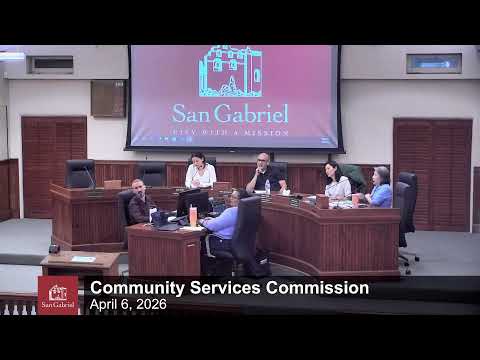
Assistant Director Matthew Marlo Stevens told the Community Services Commission on April 6 that the city is proposing a set of changes to its afterschool and middle-school sports programs for the 2026–27 school year that would shift services from free to feebased models in order to offset funding shortfalls and higher operating costs.
Stevens, identified in the meeting as the community services assistant director, said the city previously relied on the general fund supplemented by Community Development Block Grant (CDBG) dollars for youth programming but that CDBG support will not continue at prior levels. To maintain programming and add more specialized STEAM and skilled-sports instruction, staff proposed extending elementary afterschool hours from bell-to-5 p.m. to bell-to-6 p.m. and charging $125 per child per month (grades 1–5). For middle-school athletics (grades 6–8), staff proposed reducing on-site days from Monday–Friday to Monday, Wednesday and Friday and charging $75 per sport (track and field $50), while emphasizing more practice time and homework help.
The proposal grew from a parent survey that showed strong satisfaction with staff and program planning, demand for more sport-specific coaching, and interest in STEAM activities that are costly to run. Stevens said staff split the difference between survey price preferences and cost needs to arrive at $125, and estimated the fee schedule could generate approximately $190,000 in revenue. That amount, he said, would largely offset a roughly $50,000 reduction in CDBG funding but would not fully cover all future staffing and supply increases.
Commissioners asked for additional details about equity protections, outreach and procurement. Commissioner Dong pressed staff on whether low-income families would be served through existing subsidies and whether sibling discounts would be offered; Stevens said the city would coordinate with school-district subsidized programs (ELOP/AYC/Right At School) and explore sibling discounts but that exact thresholds and proration rules remain to be finalized. Stevens also said staff modeled sustainability assuming a minimum average enrollment of about 35 students per school-site (capacity is typically 45) and warned that dropping below that threshold would render the sites financially unsustainable under the proposed fee structure.
On contracting and program quality, Stevens said the city would vet third-party vendors to provide lead coaches (naming Breakthrough Sports as an example), require live-scan background checks and TB tests for on-site instructors, and consider coach certifications (for example SafeSport/SafeCoach) as part of contract requirements. He said the city preferred agencies with proven experience rather than one-off hires.
Stevens emphasized that the proposed fees and operational changes will be presented to the City Council as part of the FY 2026–27 budget and the fee-schedule adoption process; no final change will occur without Council approval. He also said staff will produce outreach materials — FAQs and notices to PTA and parent groups — to explain minimum enrollment thresholds, subsidy options and implementation timing.
Commissioners and staff agreed that more community outreach is needed before any fee adoption. Several commissioners warned that higher fees could prompt some families to enroll in neighboring cities’ programs or private clubs, potentially reducing enrollment and undermining projected revenues. Stevens acknowledged those risks and recommended further stakeholder engagement prior to final recommendations to council.
The commission did not take a formal vote on the program proposal at the meeting; staff will return with refined figures and implementation details for Council consideration during the budget and fee-schedule process.