Get Full Government Meeting Transcripts, Videos, & Alerts Forever!
Get email alerts on the Wastewater Projects topic
No spam. Unsubscribe anytime.
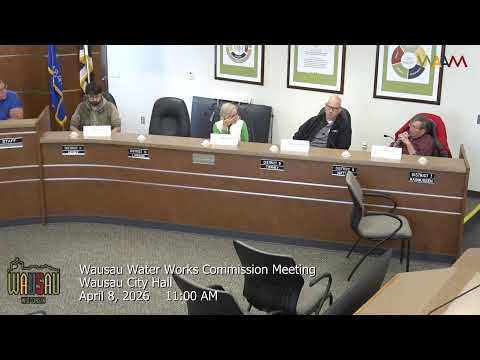
Wausau utility reports progress on Hedrick screens, Cherry Street delays and DNR Class A biosolids approval
Summary
Staff told the Waterworks Commission the Hedrick screening project is ahead of schedule, the Cherry Street lift station faces contractor delays with possible additional city costs, and the utility received Wisconsin DNR approval to classify biosolids as Class A while the sludge management plan remains under review.
Ben (staff) updated the commission on April 8 that new step screens at the Hedrick facility are capturing substantial debris and appear to be reducing wear on downstream equipment. He said the crew is “filling a 2 and 1/2 yd dumpster in 2 days,” and that reduced rags and hair should lower annual replacement costs the utility had been bearing (staff cited prior replacement expense around $20,000 per year).
Ben also reported delays on the Cherry Street Lift Station project stemming from contractor/subcontractor miscommunications. He said staff are documenting additional engineering time and costs and will discuss timelines with Eric (director) to determine if the city should pursue compensation.
On biosolids, staff said the Wisconsin DNR issued a Class A biosolids approval letter; the utility’s sludge management plan (SMP) remains under DNR review, with a DNR biosolids program contact temporarily out at a PFAS conference. Staff explained Class A designation allows distribution of biosolids to farmers and the public provided tracking and documentation requirements are met, and staff expects the discharge permit to follow.
Separately, Ben summarized PFAS testing requirements and the utility’s current status: effluent testing is required bi-monthly, biosolids testing annually, and there is currently no approved influent testing method. Reported effluent and biosolids concentrations are below the guidance thresholds cited in staff materials. Ben said these results indicate the utility is complying with state-provided guidance.
Commissioners asked whether adding polyphosphate for corrosion control would increase total phosphorus in wastewater and whether the wastewater plant can remove it. Staff said removal is feasible — potentially with Kruger disc filters or chemical additions such as alum — but using tertiary treatment would add chemical and operational costs to the wastewater treatment plant. The corrosion-control optimization study recommending sodium silicate plus 1 mg/L polyphosphate was submitted to the DNR; staff will meet DNR on June 9 and expects a formal response in fall. If DNR concurs, the utility would have two years to implement.
No formal votes were taken on the projects during the April meeting; staff said further details and possible presentations (CDM Smith) will return to the commission in coming months.