Get Full Government Meeting Transcripts, Videos, & Alerts Forever!
Get email alerts on the Land Use topic
No spam. Unsubscribe anytime.
Council approves 50-acre Thomas Road rezoning for recycling and crushing operations
Summary
The council voted to rezone roughly 50 acres at the former Frank Scott prison site to Heavy Industrial to allow a recycling and crushing staging area; the applicant said dust controls and tarping on trucks will limit impacts and the site is expected to employ about 25 people.
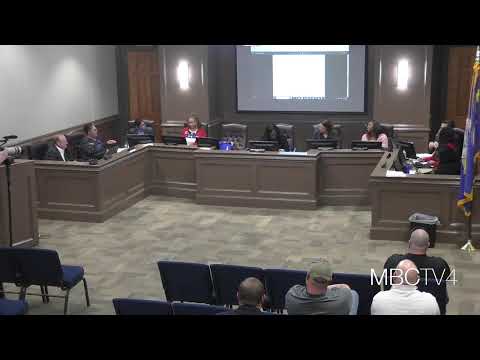
The Milligville City Council voted Jan. 13 to rezone approximately 50 acres at 217 Thomas Road from its prior designation to Heavy Industrial to permit a recycling and concrete-and-brick crushing staging area.
The zoning administrator, Mr. Barwell, told the council the Planning & Zoning Commission recommended the rezoning 4–1 at its Dec. 1 meeting; the lone dissent raised concern about potential dust and proximity to Midway School. Developer T. Smith said the site is the old Frank Scott prison property, that the project is "a green project" and that crushing would include on-equipment abatement systems and truck tarping before vehicles leave the site. "So I see no dust coming off this place at all," Smith told council. He said the operation would use an internal access route to Route 441 to avoid running heavy trucks past nearby mobile-home parks and estimated a minimum of 25 employees once operating.
Council members asked whether dust could reach nearby residences and mobile-home parks; Smith and the zoning administrator described wet-down procedures, enclosed crushing equipment with dust abatement, and tarp systems on trucks that comply with DOT rules. The council then voted by roll call to accept the Planning & Zoning findings and advance the ordinance O-210-14; the motion carried on recorded votes of the council.
Why it matters: The rezoning clears the way for an industrial processing operation on state-acquired property that proponents say will reuse demolition materials and create local jobs, while neighbors and one Planning & Zoning commissioner raised air-quality and traffic concerns. The developer and staff said permits with the Georgia Environmental Protection Division and DOT-compliant controls remain required before full operations begin.
The council’s action was limited to the land-use decision; additional state and local permits must be secured and monitoring or mitigation measures can be required at permit stage. The Planning & Zoning report, applicant presentation and council Q&A were all part of the public-hearing record.