Get Full Government Meeting Transcripts, Videos, & Alerts Forever!
Get email alerts on the Arts Education Access topic
No spam. Unsubscribe anytime.
Students, parents and board press Pasco district to protect music and arts as budgets, staffing prompt program changes
Summary
Community members and student board representatives urged the Pasco School Board to preserve choir and other arts offerings after staffing changes and enrollment shifts led to gaps; the superintendent outlined master-schedule limits, noted the levy was intended to maintain services, and scheduled a deeper study session on high-school master scheduling.
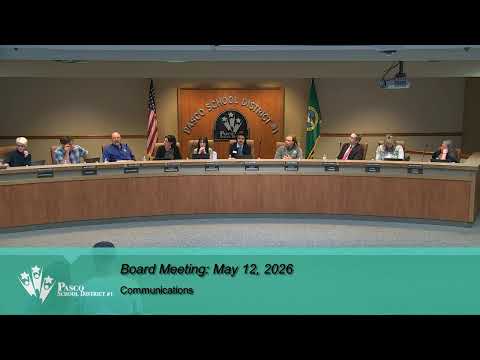
Several students, parents and former teachers told the Pasco School Board on May 12 that music and performing-arts programs — notably choir at middle and high school levels — have been reduced or face uncertain availability next year, and they urged the district to act to preserve those opportunities.
Heidi Nelson, a retired choir teacher, said she learned Pasco High would have no choir next year and described choir’s importance to students’ engagement. "It breaks my heart to hear that about the music program," Nelson said during public comment, and offered to volunteer and serve on a committee to help restore programs. Community commenter Kim Brown, appearing online, urged the board to recognize that arts are essential pathways to learning and belonging for many students.
The board addressed those concerns during a report on specialists, exploratory courses and electives led by Superintendent Whitney. Whitney stressed that Washington state law requires districts to provide access to arts education but does not prescribe identical delivery at every campus; she said the district aims to preserve meaningful opportunities while balancing staffing, enrollment declines and financial constraints. "Equity is not always identical program offerings at every campus," Whitney said, noting that variations reflect staffing, student interest and sustainability.
During the presentation Whitney and assistant staff described operational realities: as schools shrink in enrollment and budgets are constrained, adding a full course to a high-school master schedule represents a material district investment (Superintendent Whitney said adding a class into the master schedule is roughly an $85,000 decision). The board and the superintendent discussed alternatives — shared regional programs, rotating a single teacher across multiple campuses, volunteer support, targeted grants and transporting students to consolidated productions — as ways to preserve access without creating unsustainable single-school positions.
Student speakers, including a student board representative who described leading choir despite not being a certified teacher, asked the board to accelerate solutions because delays could mean students lose the opportunity during their middle- and high-school years. "If we're waiting for students to ask for these opportunities, we're never going to have them," a student board representative said, arguing that elementary feeder experiences can be lost if middle schools do not maintain programs.
Board members said they value arts and asked staff to explore creative scheduling and partnerships. Several directors suggested interim approaches — for example, a single drama teacher rotating trimesters among three high schools or staging productions at different schools to reduce transportation barriers — and noted volunteer and grant-funded community productions can be part of a short-term strategy. Superintendent Whitney said the recently passed levy was designed to maintain current services, not expand them, and reaffirmed that the district is scheduling a study session focused on high-school master schedules with consultants to consider solutions.
Next steps: the board scheduled a deeper study session on master-schedule design and signaled interest in exploring regional sharing, volunteer coordination and grants; staff and community volunteers were encouraged to collaborate ahead of that session.