Get Full Government Meeting Transcripts, Videos, & Alerts Forever!
Get email alerts on the Special Education Apprenticeship topic
No spam. Unsubscribe anytime.
Pasco partners with WEA to grow special-education teacher pipeline through paid residency
Summary
Pasco School District described its partnership with the Washington Education Association’s special-education apprenticeship residency: an 18-month, school-based pathway that pays apprentices, requires a bachelor’s degree for entry, includes multiple rotations and expects a three-year commitment to the district after completion.
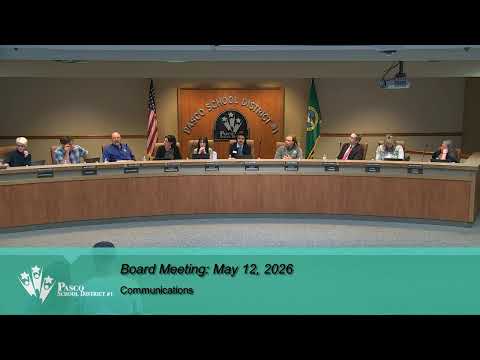
Tracy Wilson, director of the district’s Special Education Department, told the Pasco School Board on May 12 that the district is deepening a partnership with the Washington Education Association to recruit and train special-education teachers through a paid, 18-month apprenticeship and residency model. The program combines coursework, mentorship and hands-on classroom experience to address ongoing special-education staffing shortages.
The program enrolls candidates who already hold a bachelor’s degree, places them as paid apprentices in district classrooms and rotates them across multiple special-education settings so they gain experience at elementary, middle and high school grade bands, Wilson said. Students earn pay while completing certification coursework and receive mentorship from district mentor teachers and instructional coaches. "This residency model provides apprentices with structured experiences across multiple special-education settings," Wilson said, describing rotations, mentoring and district support.
Jacqueline Brown, a program specialist with the WEA, explained the residency sequence and wage progression in more detail. Apprentices typically begin with a paraeducator rotation for about six months, then spend a full school year in three 12-week rotations across different settings. During the classroom-year rotation the program guarantees a minimum salary of $40,000; the first year of teaching after certification is paid at a minimum starting salary equivalent to a bachelor’s degree plus 90 credits (Jacqueline Brown described that as beginning at about $75,000 in the district’s pay structure).
Wilson said the district selects a small cohort annually (Pasco typically selects four apprentices each year from a strong local applicant pool) and that the partnership is intended to both reduce barriers to certification and increase retention of special-education teachers who reflect the district’s student population. The WEA provides the approved coursework and certification pathway; Wilson told the board that the WEA coursework has been approved by the state’s professional educator standards board so it qualifies for endorsement credit.
Program participants commit to completing the residency and certification requirements and generally agree to work for the district for three years after completion, Wilson said; the district provides paid employment, benefits and classroom placements during training. "This creates a strong investment in developing and retaining highly qualified special-education teachers within our district," Wilson said.
Board members asked about admission requirements, curriculum approval and the nature of post-completion agreements. Wilson reiterated the bachelor’s-degree prerequisite and explained the agreement with WEA, the association and the district that facilitates employment offers upon successful completion. Jacqueline Brown described how districts can strategically place apprentices in classrooms with known upcoming vacancies to bolster continuity.
Applications for the next cohort open through Sept. 18, 2026; Wilson said the district will encourage staff, families and community members to share information about the opportunity.
Next procedural step: board members signaled support and asked staff to continue recruitment and to provide updates; no formal action was required at the meeting.