Get Full Government Meeting Transcripts, Videos, & Alerts Forever!
Get email alerts on the School Budget topic
No spam. Unsubscribe anytime.
Murray County board previews balanced $81 million FY27 budget, cites low per‑pupil revenue
Summary
Board staff presented a preliminary $81 million FY27 budget the district says is balanced, citing a $7.9 million unassigned fund balance, a four‑star financial‑efficiency rating, planned 1% local increases and 26 positions eliminated through attrition to close prior deficits.
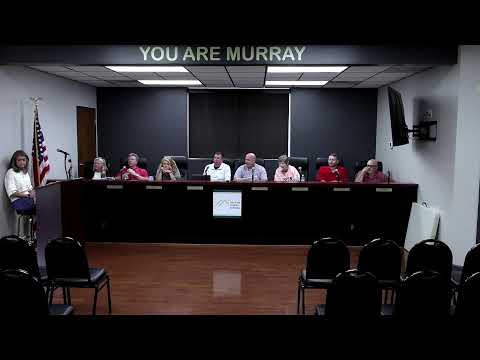
The Murray County Board of Education on Thursday reviewed a preliminary FY27 budget that staff said would present balanced revenues and expenditures of about $81 million and that would add modest school allocations while keeping overall spending under tighter control.
Board staff opened the workshop by noting the district earned a four‑star financial‑efficiency rating from the Governor’s Office of Student Achievement, and that Murray County received $12,711 per student in FY25 compared with a state average of $15,768, placing the district among the lower revenue systems in the state. “That’s a lot of money that the average system in the state has over us,” a presenter said while reviewing per‑pupil revenue comparisons.
Why it matters: The district’s per‑pupil revenue shortfall and higher statewide cost pressures for retirement and insurance have shaped staffing and spending choices. Presenters told trustees the FY25 audit showed an unassigned fund balance of $7.9 million and that the fund balance fell by $851,380 from FY24 to FY25, but that careful staffing decisions and attrition have helped reverse multi‑year deficits.
What’s in the proposal: The preliminary plan assumes roughly $81 million in revenues and $81 million in expenditures and models modest pay adjustments: the local portion of the certified teacher scale would rise from 9% to 10% (the presenter framed the change as an increase in the district’s local share of the salary scale rather than a flat 1% on each employee’s annual pay), and the budget includes a 1% add on the classified scale paid as a full 1% increase on each step. Staff estimated an average certified increase on the local portion near several hundred dollars per teacher in the model.
Staffing and contracting: Trustees heard that, over several years, administrators reviewed open positions and used attrition to remove budgeted roles; staff said 26 positions were eliminated through that process, a change credited with helping produce a balanced plan. The district continues to use contracted paraprofessionals through ESS for roughly 26 positions in the budget and added four ESS instructional parapros to support four schools; presenters noted tradeoffs between hiring employees directly (with benefits) and contracting as benefits and retirement costs rise.
Technology and federal funds: District leaders told the board they plan to consolidate federal funds into a single federal fund and to buy student and teacher Chromebooks out of that consolidated federal pot rather than the general fund. Staff said Chromebooks would be refreshed to replace aging devices and emphasized Chromebooks are a classroom tool rather than a replacement for instruction.
Other items highlighted: The presentation included planned increases for maintenance and operations (including a janitorial contract reviewed after performance issues), enhanced allocations for building repairs, transportation equipment and engine/transmission repairs for buses, and a note that school resource officer (SRO) costs will carry a higher local share in FY27 because a one‑time supplemental state payment in FY26 was not repeated.
Next steps: Staff said they will present the federal budget by October 1 and will ask the board to vote to advertise the preliminary FY27 budget at the regular session; trustees indicated they were prepared to move forward with advertisement for public review. The workshop included questions from several trustees and staff clarifications on assumptions, and no final appropriation vote occurred in the workshop.
Sources: Presentation and audit figures reported at the Murray County Board of Education budget workshop; direct remarks attributed to the superintendent and Dr. Smith as presented in the workshop transcript.