Get Full Government Meeting Transcripts, Videos, & Alerts Forever!
Get email alerts on the Condemnation Rescissions topic
No spam. Unsubscribe anytime.
Council hears report showing 67 rescissions of condemnations; members press for funding, clearer process
Summary
The Metropolitan Council reviewed a parish report showing 67 rescinded condemnation actions from 2024–25 with roughly 40% favorable outcomes; council members pressed staff about costs, multi-month timelines, the absence of fines, and options to get owners repair help or accelerate demolitions when needed.
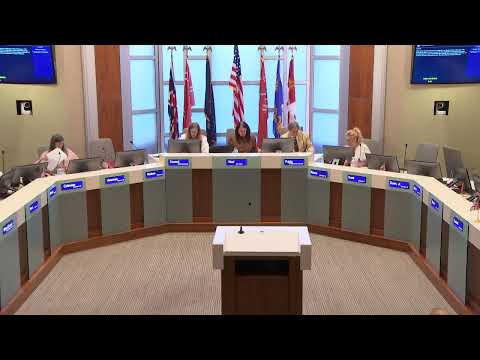
The Metropolitan Council of East Baton Rouge Parish received a report on April 8 showing 67 rescinded condemnation actions in 2024–2025 and a larger 389 total condemnations in that period, with staff characterizing about 40% of rescissions as producing favorable outcomes such as active remodels or demolition by owners.
Rachel Lambert, presenting the department’s slideshow, said the rescissions were spread across eight districts and that staff classified outcomes as “favorable” where properties were being remodeled or had active permits, “unfavorable” when there were no improvements, and a smaller set that had been recondemned. “There were 67 total recisions from 2024 and 2025,” Lambert said, and staff’s district-by-district breakdown showed the rescission share tracked closely with overall condemnation patterns.
Council members focused on how the rescission process works and the cost and time burdens it creates. Lambert described required administrative steps and fees: a party requesting rescission must pay recording fees and, if asbestos testing or demolition occurs, those costs are recouped. “If it they don’t pay after probably 60–90 days … we’re removing the hold and putting it back on the demo list,” she said, noting liens and tax-roll collection are used to recover costs in some cases.
Members pressed staff for timelines. Lambert estimated an average roughly six months from complaint to a condemnation decision, with additional steps after condemnation—grant pre-approval, asbestos testing (about 30–45 days), and utility disconnection (she said energy and gas disconnections can take about eight weeks)—so demolition or other action could be several months afterward. “We’re about four to six months in” to get to condemnation and then “another two to three months” at minimum before physical work could be completed in an ideal case, she said.
Council discussion showed a split between protecting owners’ opportunities to rehabilitate properties and reducing repeated staff effort where rescinded cases stall. Councilman Mo and others urged stricter criteria before removing a property from condemnation if no clear, credible plan exists. “I’m all for… homeowners coming up and getting help,” Mo said, but added that rescissions should be backed by verifiable progress so the council and staff do not repeatedly expend resources on the same properties.
Several council members and staff flagged the lack of an explicit fine or penalty tied to condemnations. Lambert said there is no routine civil fine for condemnation similar to blight-court fines; the parish generally recovers recording and asbestos/demolition costs and can place a lien if those costs are not repaid. “There are no actual fines or fees as far as like a penalty for condemnation,” she said.
Council members also pressed for improved outreach and programmatic options to help owners rehabilitate property rather than proceed straight to demolition. Councilwoman Rocka and others asked whether the parish could assemble an informational packet and run more district-level town halls to publicize available state and federal programs, nonprofit partners, and possible roofing or rehabilitation assistance. Representatives from the Office of Community Development (OCD) present in the chamber confirmed entitlement and grant funds are annually published in a one‑year action plan; staff said they are working to make information and program signups more recurring and accessible.
Members urged partnerships to expand assistance: Councilman Dunn suggested compiling a list of funding avenues and directing owners to nonprofits and grant resources, while Councilwoman Coleman proposed targeted outreach to districts with concentrated blight. Lambert said some disaster and entitlement dollars have been used for teardown and rebuild projects and that the department is coordinating with OCD and other agencies, but also stressed that parish staffing and budget constraints limit how much the parish can subsidize demolition or rebuilding.
The presentation concluded with council members agreeing to pursue better public outreach and explore best practices used by other jurisdictions to reduce repeated rescissions and shorten timelines when owners demonstrate credible capacity to rehabilitate properties. Lambert offered to provide more detailed district-level documentation and to work with council offices on community meetings and outreach materials.
The council did not make policy changes at the meeting; staff were asked to return with follow-up materials and examples of possible program and ordinance fixes that could reduce repeated administrative workload while preserving opportunities for owners to rehabilitate properties where feasible.