Get Full Government Meeting Transcripts, Videos, & Alerts Forever!
Get email alerts on the Meeting Roundup topic
No spam. Unsubscribe anytime.
Rhinebeck board roundup: small park upgrades, hires, tax settlements and occupancy tax approved
Summary
At its May 11 meeting the Rhinebeck Town Board approved multiple routine and policy items: a community-fridge concrete pad, seasonal hires, a historic-site survey, tax-certiorari settlements, an intermunicipal park agreement, and a municipal 3% occupancy tax under state home-rule authorization.
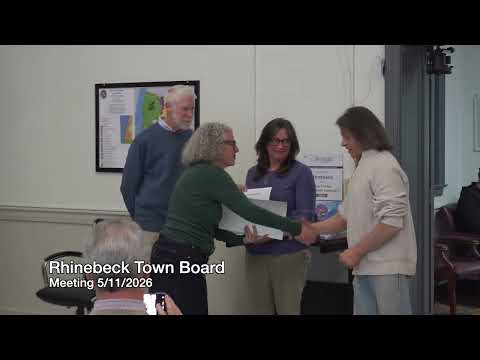
The Rhinebeck Town Board used its May 11 meeting to approve a range of routine and policy items in unanimous votes.
Key approvals included: a small concrete pad and electrical connection for a community refrigerator near the community garden (Resolution 2026-152), seasonal recreation hires and a seasonal gardener (Lauren Blum), appointment of Jonathan Barry to the Board of Assessment Review, and authorization for scheduled document shreddings (Resolution 2026-149).
Financial items cleared on consent included preliminary accounts-payable abstracts and the settlement of several tax-certiorari proceedings (resolutions 2026-160 through 163). The board also approved an updated intermunicipal agreement with the village for Thompson Maserella Park that clarifies police-protection responsibilities before the summer season.
In a policy item, the board voted to pursue a municipal occupancy (bed) tax at 3% under a three-year state authorization, a measure the board said should generate non–property-tax revenue for town services and projects.
The board also approved funding (approximately $10,000 budgeted) to hire an architectural graduate, Isabel Pronto, to survey the town’s historic properties listed in the comprehensive-plan appendix; that survey is intended to provide a baseline for future permitting and local-law updates.
All of the above passed by recorded unanimous consent in the meeting. Items that require additional steps include publication of bids or notices (for hires, RFPs, and the occupancy-tax implementation), and public hearings on certain proposals scheduled separately in the meeting.
What happens next: staff will proceed with the administrative steps authorized by the board—payroll and hiring paperwork, surveys and contract solicitations, and procedural notices tied to tax settlements and the occupancy-tax implementation.