Get Full Government Meeting Transcripts, Videos, & Alerts Forever!
Get email alerts on the Budget topic
No spam. Unsubscribe anytime.
Board debates 3% proposed tax increase amid concerns about reduced transportation reimbursement and reassessment risks
Summary
The finance committee proposed a 3% tax increase that would raise about $315,000; board members debated 2%–3% alternatives as staff warned state transportation-reimbursement changes could cut roughly $400,000 next year and reassessment/rebalancing may affect future revenue. The board directed staff to put the budget up for a vote next week.
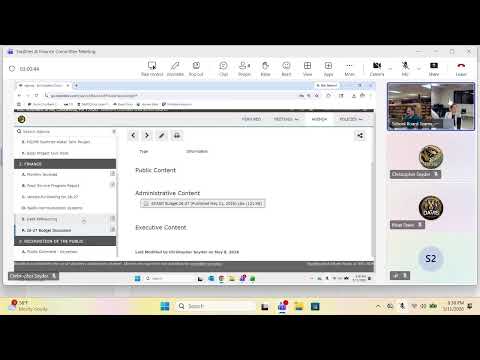
The board’s finance discussion on May 11 focused on a proposed 3% tax increase, transportation-reimbursement risk, and how reassessment could affect future revenues.
Administration said a 3% increase would raise approximately $315,000 and bring the proposed total revenue to roughly $27.8 million under current assumptions. Finance staff and board members discussed transportation subsidy math and warned that the change to contracted transportation and a smaller bus fleet could reduce state reimbursement by about $400,000 next year under current formula assumptions (district reimbursement ratio cited at about 0.526). That projected shortfall was a central point in the debate over whether to set tax-rate increases at 2%, 2.5% or 3%.
Board members also discussed refinancing options for district debt if market rates create material savings; staff said they would monitor market conditions and bring refinancing proposals only when savings exceed the board’s established thresholds. There was also extended discussion of the limits posed by Act 1 indexing and the mechanics of county reassessment and rebalancing, which could shift tax-base impacts across municipalities in the multi-county district.
Several board members argued for raising only what is necessary to meet next year’s needs; others favored a larger increase to preserve operating flexibility amid forecast uncertainty. Administration noted some one-time technology and transportation costs (for radios, camera removal and transfer-related expenses) could be funded from existing infrastructure balances (Columbia-Montour funds) rather than recurring revenue. The finance chair asked staff to place the proposed budget on next week’s agenda for a formal vote.
Board members asked staff for clearer breakdowns of the transportation subsidy calculations, the cost and payment schedule if buses or vans were purchased and the one-time impacts of the communications/radio purchases. Staff committed to returning updated modeling and concrete bids in time for the budget vote.