Get Full Government Meeting Transcripts, Videos, & Alerts Forever!
Get email alerts on the Land Use topic
No spam. Unsubscribe anytime.
Glendale opens public hearing on new objective design standards for multifamily housing; council directs staff to refine draft
Summary
Council introduced a broad zoning code amendment to add objective design standards (ODDS) for multifamily and mixed‑use development required by state law, heard extensive public testimony both supporting design predictability and criticizing outreach and one‑size‑fits‑all rules, and directed staff to return with edits before adoption.
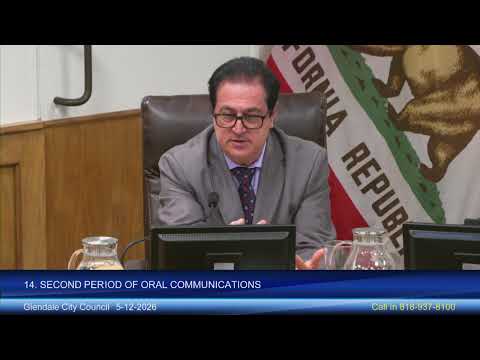
The Glendale City Council on May 12 opened a public hearing to introduce a comprehensive draft ordinance that would amend Title 30 (the zoning code) to add objective design standards for multifamily and residential mixed‑use development.
Planning staff framed the ordinance as a response to state housing laws and SB 79, which increase the importance of objective, measurable standards for housing projects. Theresa Santillana and other long‑range planning staff said the draft updates development standards (setbacks, allowable floor‑area ratios, open‑space formulas), creates a new objective design standards (ODDS) chapter for projects of three or more units, and seeks to translate subjective guidelines into measurable criteria. Staff said no change to density limits was proposed but some lot‑coverage and setback calculations would be adjusted to create more predictable outcomes for applicants.
The Planning Commission recommended approval and forwarded five suggested edits for council consideration. During the hearing, dozens of residents and callers testified. Mike Borisov and other supporters urged that objective standards will raise design quality and predictability; Borisov requested that ornamental banding be accepted as an articulation option to preserve certain architectural traditions. Opponents — including neighborhood association representatives and callers — said outreach had been insufficient, worried that uniform standards would not fit varied neighborhood contexts, and urged preservation of meaningful ground‑level open space and stronger landscaping requirements.
Councilmembers discussed tradeoffs created by the impending July 1 SB 79 deadline and the need to adopt objective standards to maintain local design control. After deliberation the council provided direction to staff: include a set of Planning Commission suggestions (allowing certain interior setback areas to count toward required common open space when accessible to residents, permitting limited balcony projections, and re‑introducing an ornamental/architectural banding option) while keeping a public‑realm standard for commercial corridors; staff was also directed to clarify waiver processes and pipeline applicability. Mayor Kassakhian and several councilmembers emphasized the urgency of adopting objective rules before state changes take effect but agreed the ordinance should be returned with the refinements discussed.
No final ordinance vote was taken; the measure was introduced and staff will return with an amended draft and a scheduled adoption hearing. Council also asked staff to clarify which pre‑application or pipeline projects would be grandfathered under existing rules.